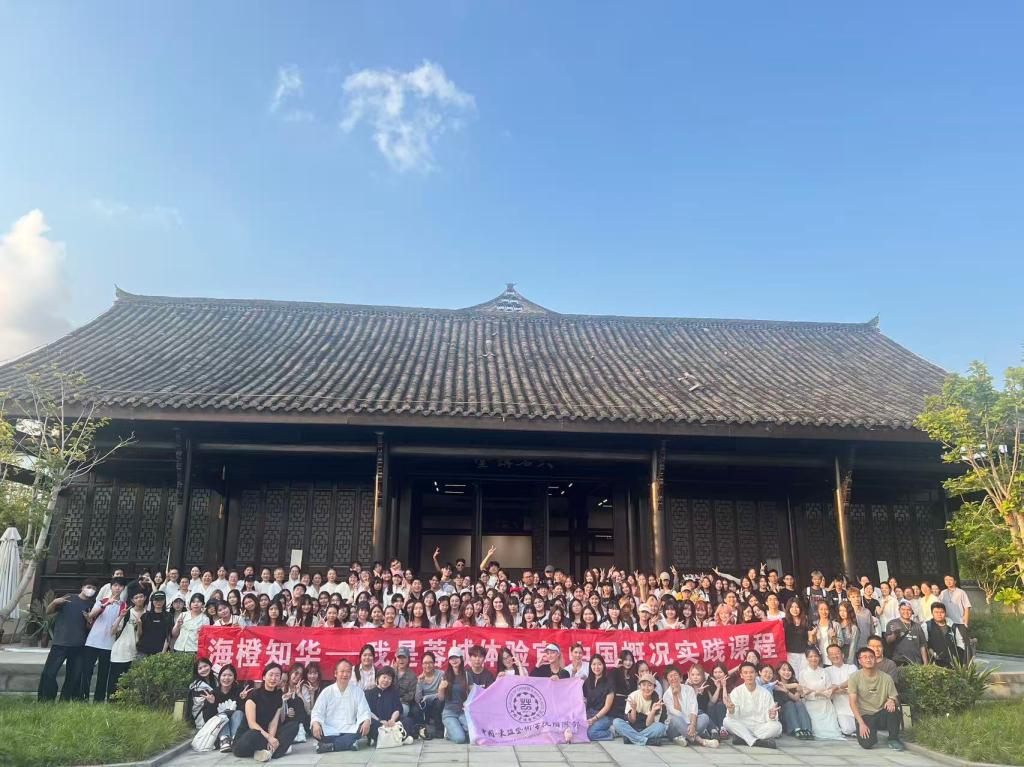
On September 25th, the highly anticipated practical course of the "China Profile" set sail once again. This cross-cultural feast transcended geographical boundaries, bringing together 174 students from 15 countries—all united by their curiosity and love for Chinese culture. Guided by instructors, the students immersed their hands in the art of incense and tea, moved their bodies to the rhythm of Baduanjin, and quietly opened a door to a deeper cultural understanding. Ancient Eastern philosophy found fresh resonance in dialogue with young hearts and minds. At its core, this “hands-on encounter with traditional Chinese culture” allowed students who had journeyed from afar to embark on an exploration that was both meaningful and alive with discovery.
The Art of Incense: An Olfactory Journey into Eastern Poetry and Painting
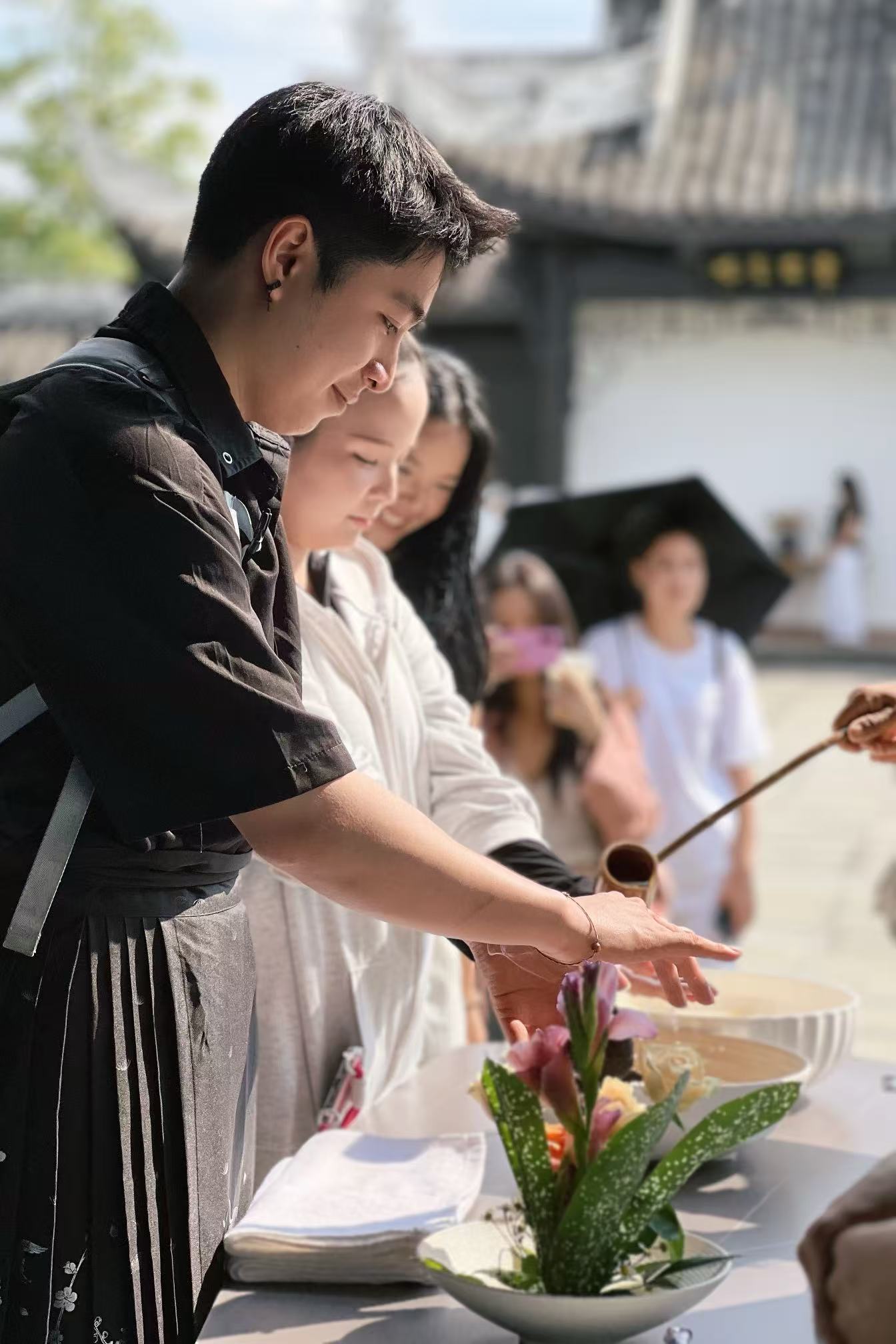
The incense ceremony began with a solemn and elegant hand-washing ritual. In front of the class, decorated in a classical style, students lined up neatly as the instructor, dressed in traditional Hanfu, gently poured water over each student’s hands from a ladle. This act marked the beginning of their journey into the culture of incense.
The teacher started by introducing the history and varieties of incense. Using vivid images, detailed references, and clear explanations, they outlined the remarkable evolution of Chinese incense culture over thousands of years. From the early reverence for natural fragrances and the use of incense in rituals, to the influx of exotic spices along the Silk Road during the Han Dynasty—which spurred the development of rich incense traditions and tools—the students were guided through a living history of Chinese incense culture.
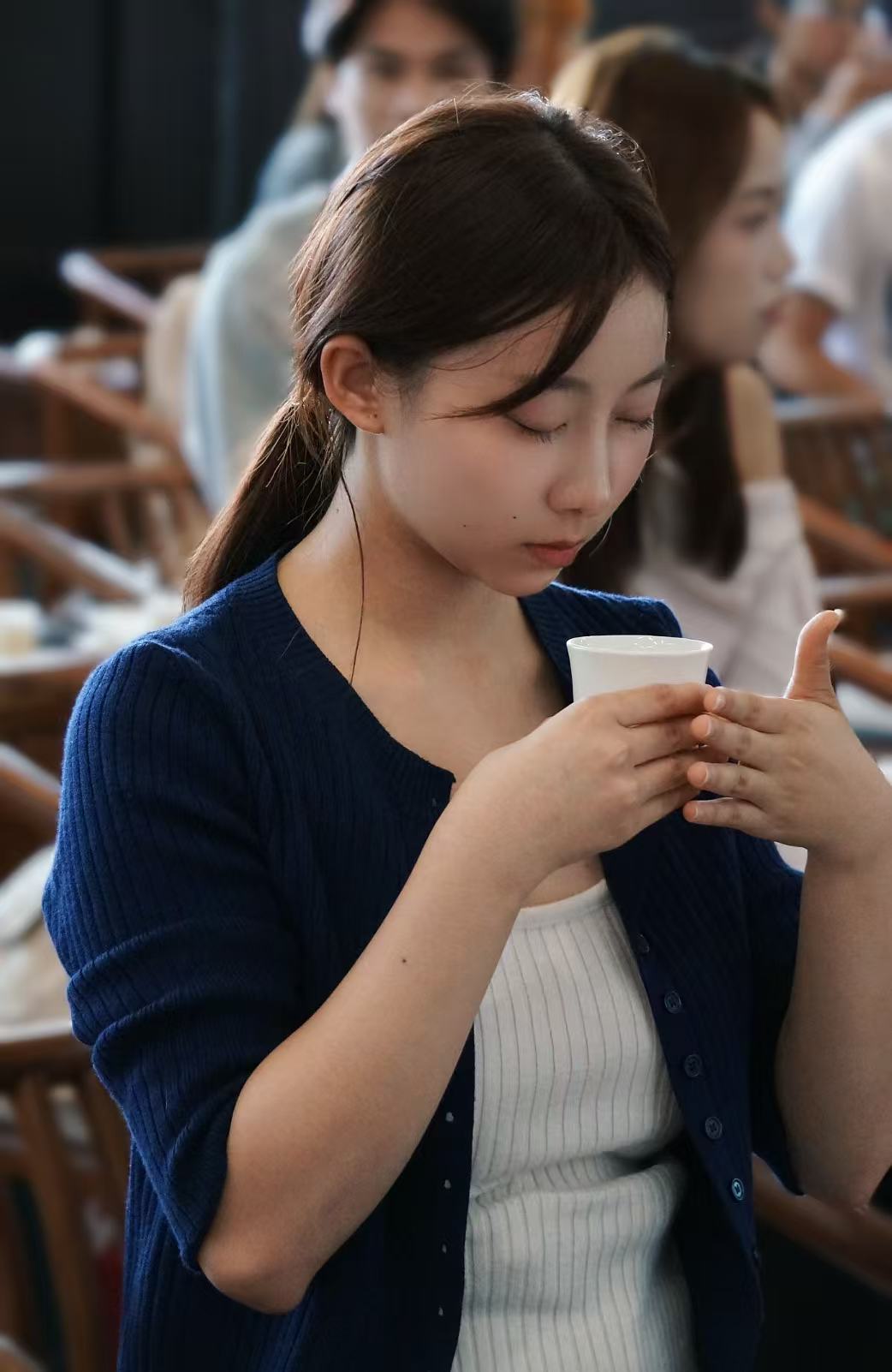
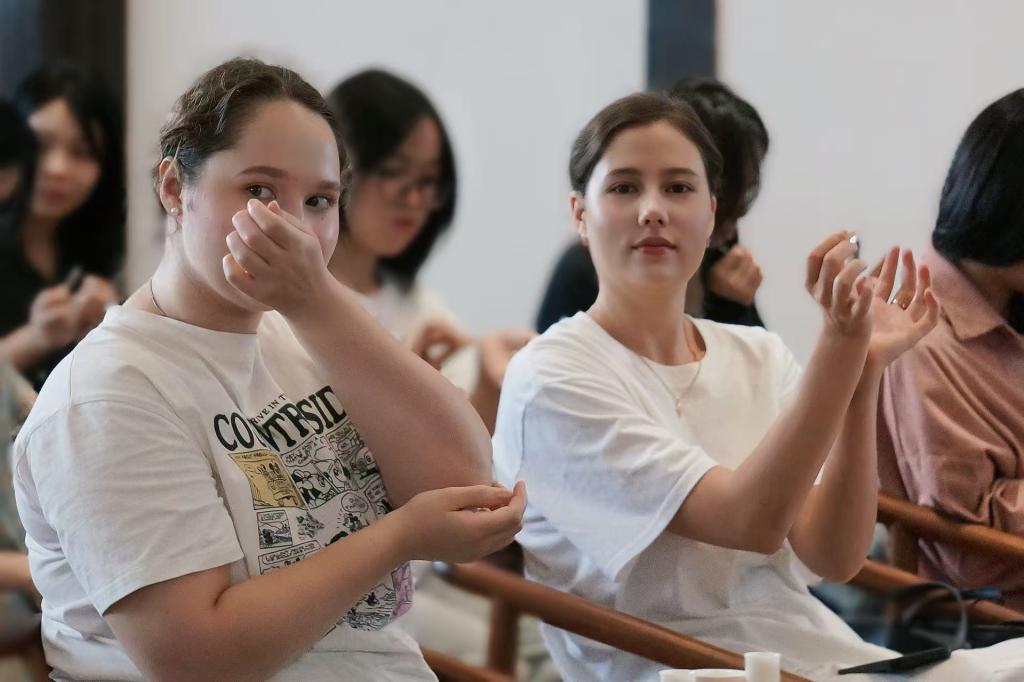
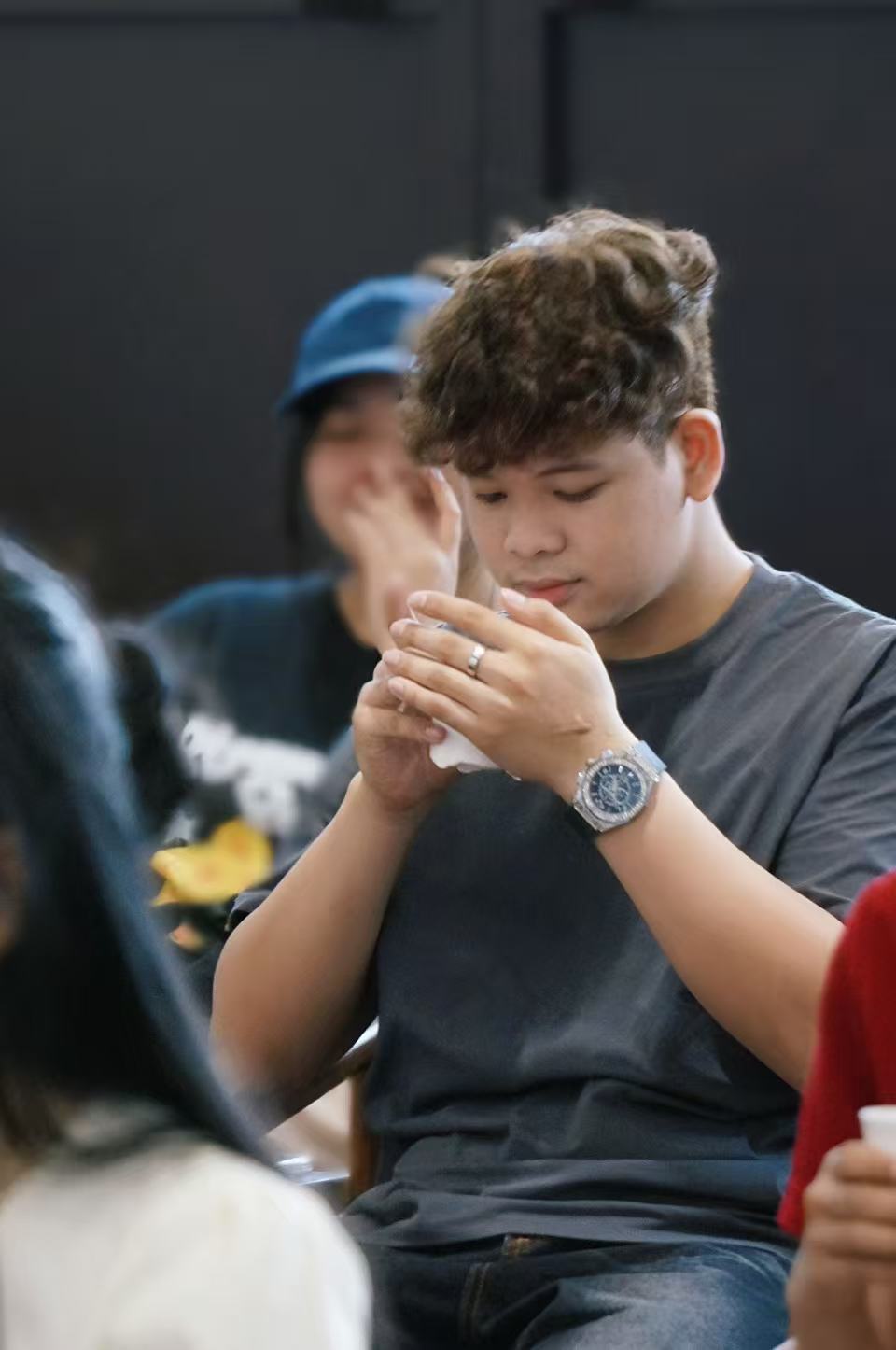
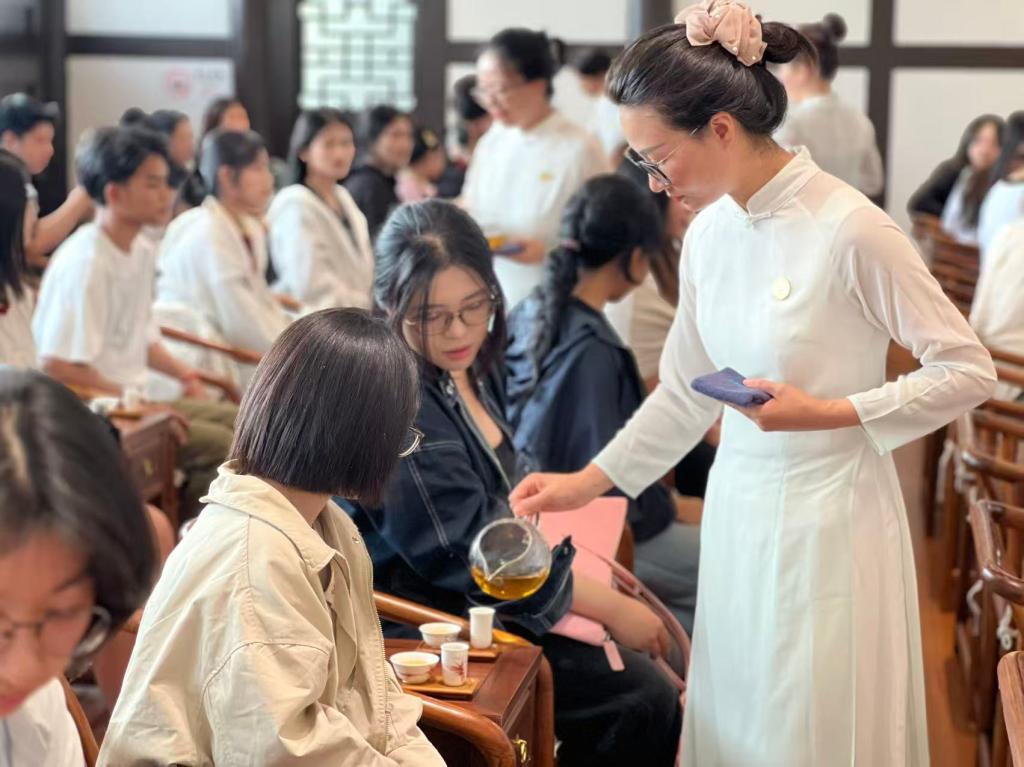
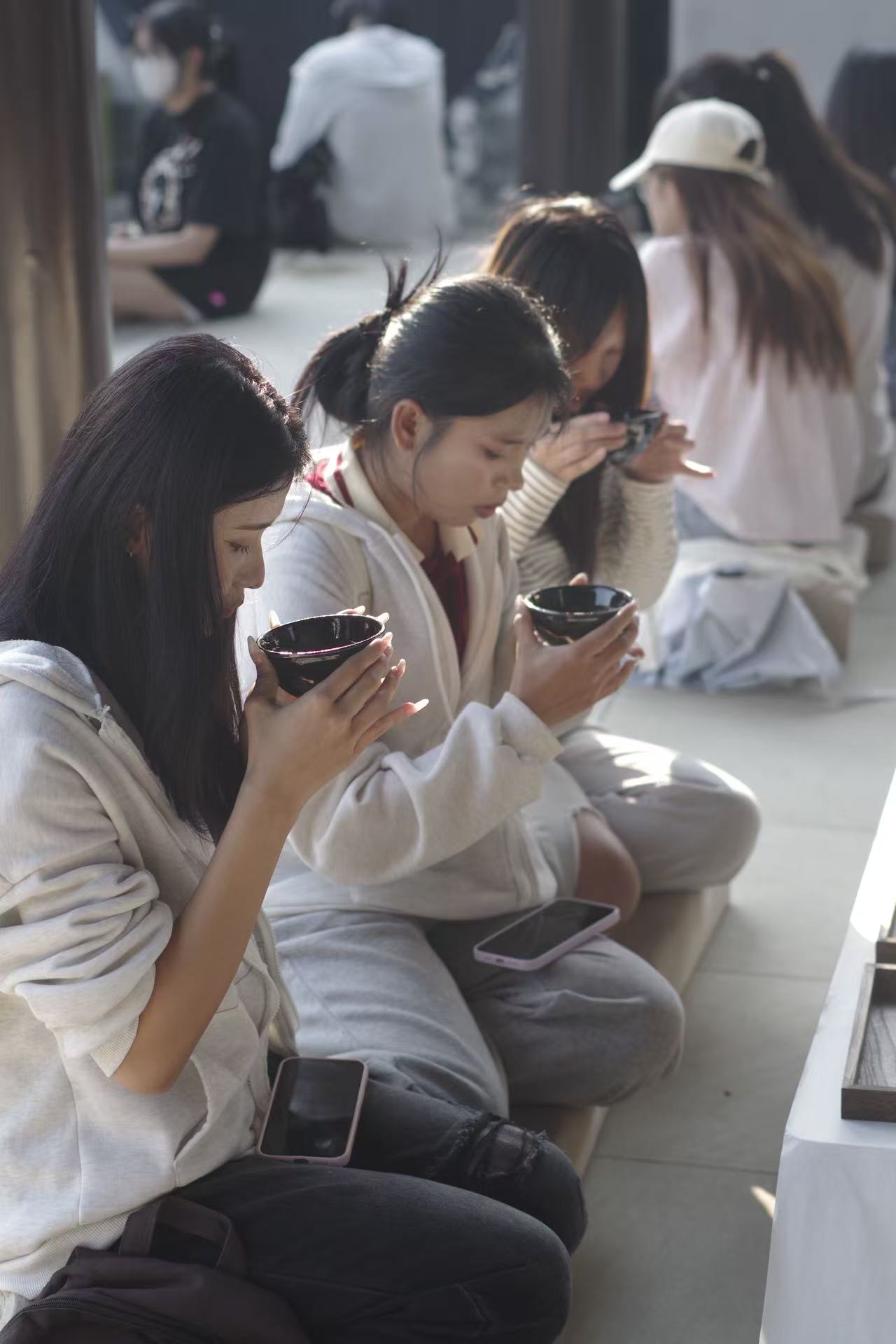
Next came the immersive experience of “smelling incense” and “drinking fragrant tea.” Students were taught to gently lift the incense cup, bring it close to their nose, and inhale slowly, allowing the fragrance to unfold. Some closed their eyes, absorbed in the subtle shifts in scent; others shared their impressions, delighting in the sensory discovery. When it was time to taste the fragrant tea, the floral note of rose spread softly in the mouth. The teacher explained that this special tea is brewed with a blend of aromatic ingredients and tea leaves, offering not only a unique flavor but also health benefits.
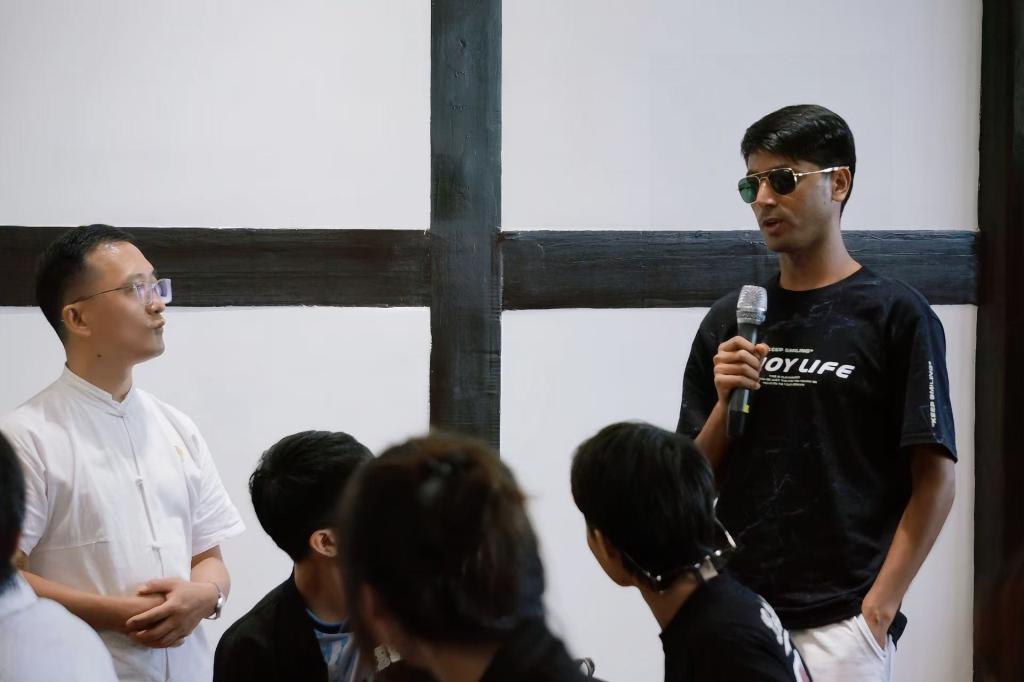
“I always thought incense was strong and heavy,” shared Lau Jia Hui from Malaysia, “but today I learned it can be light, soothing, and truly relaxing.” As the students sipped the fragrant tea and listened to the instructor, it was as though they were savoring a beautiful poem—one where incense and tea came together in perfect harmony.
Baduanjin Rhythm: A Traditional Practice for Body and Mind
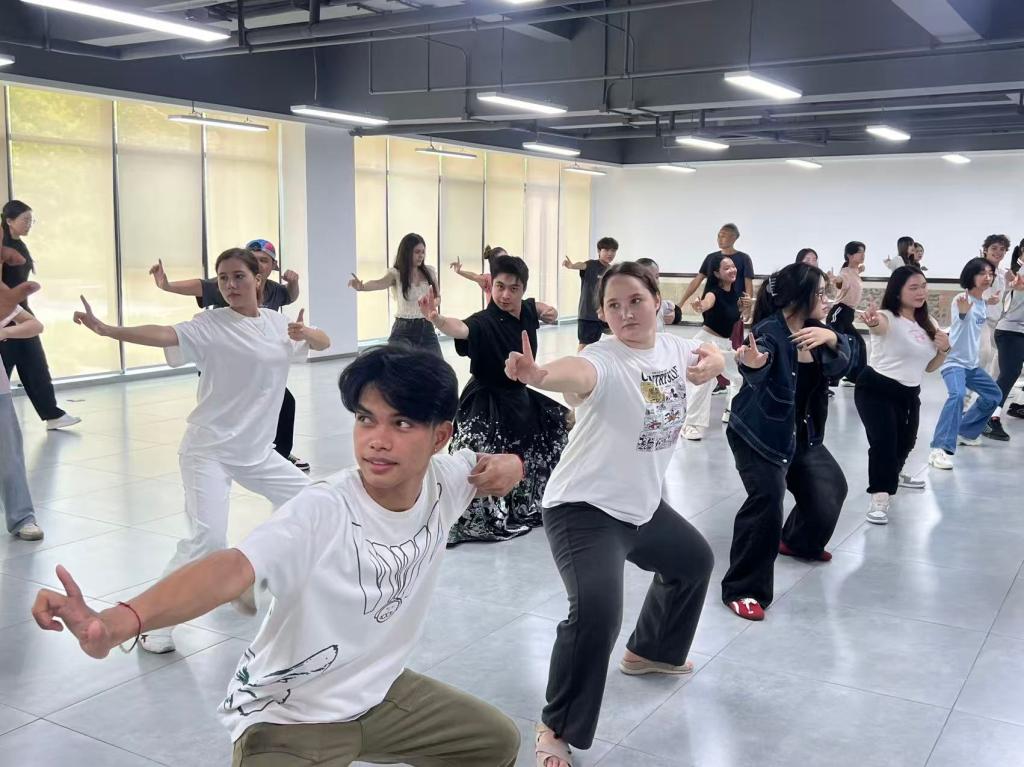
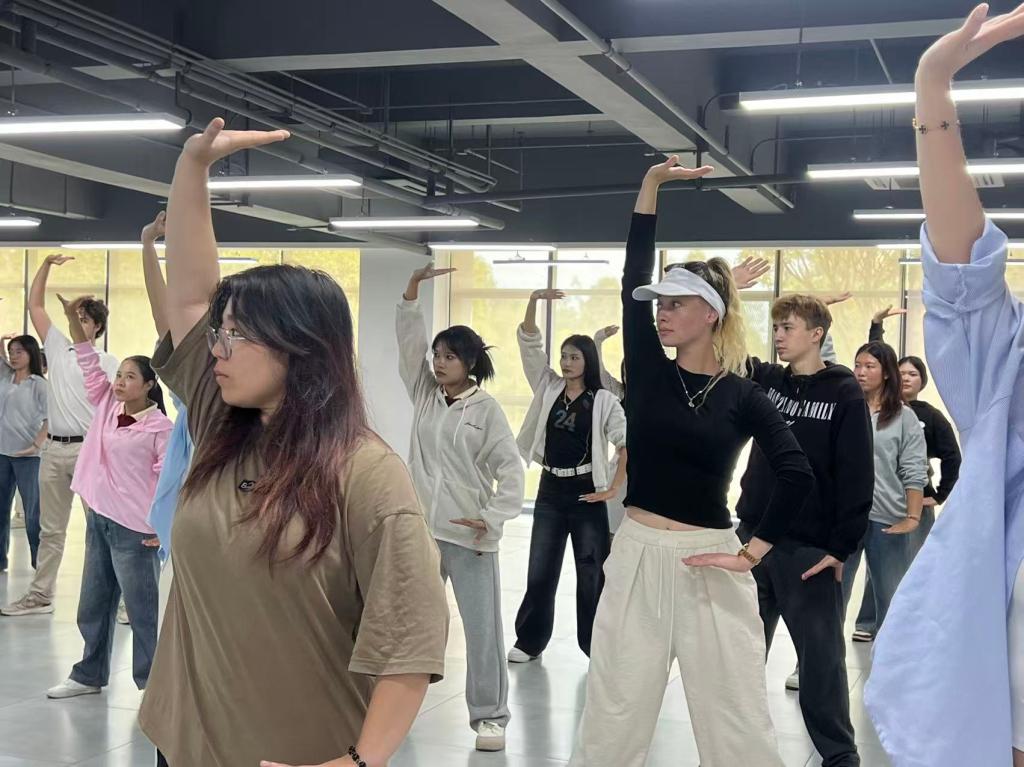
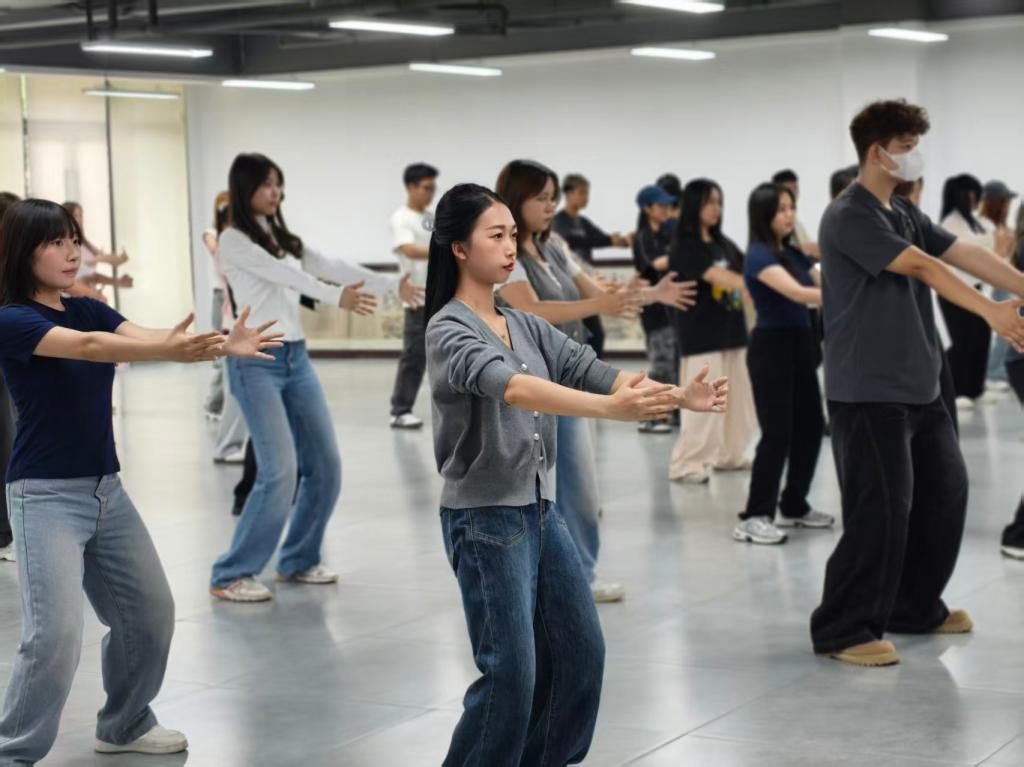
In the dance studio of Building 10 at the College of China & ASEAN Arts, a Baduanjin session was in full swing. The instructors, dressed in traditional Chinese custumes, stood energetically at the front—demonstrating each movement while clearly explaining its purpose and benefits.
The teacher slowly raised both hands upward as if holding up the heavens. Students followed along, sensing the flow of energy within, as though becoming one with the universe. In a more powerful movement, the students stretched earnestly, imagining themselves as heroic archers roaming freely under the sky.
Although some movements felt challenging at first, everyone practiced with enthusiasm, continually adjusting their postures. A student from Vietnam shared with a smile, “Baduanjin looks simple, but it’s not easy to do! Still, after the practice, my whole body feels refreshed and full of energy—it’s like breathing new life into me. I’m truly impressed by the charm of traditional Chinese wellness practices.”
Through the session, students not only exercised their bodies but also experienced the philosophy of “harmony between human and nature” and “balance of body and mind” embedded in this tradition—an invisible thread connecting their physical and inner well-being.
The Way of Tea: Tasting Eastern Philosophy
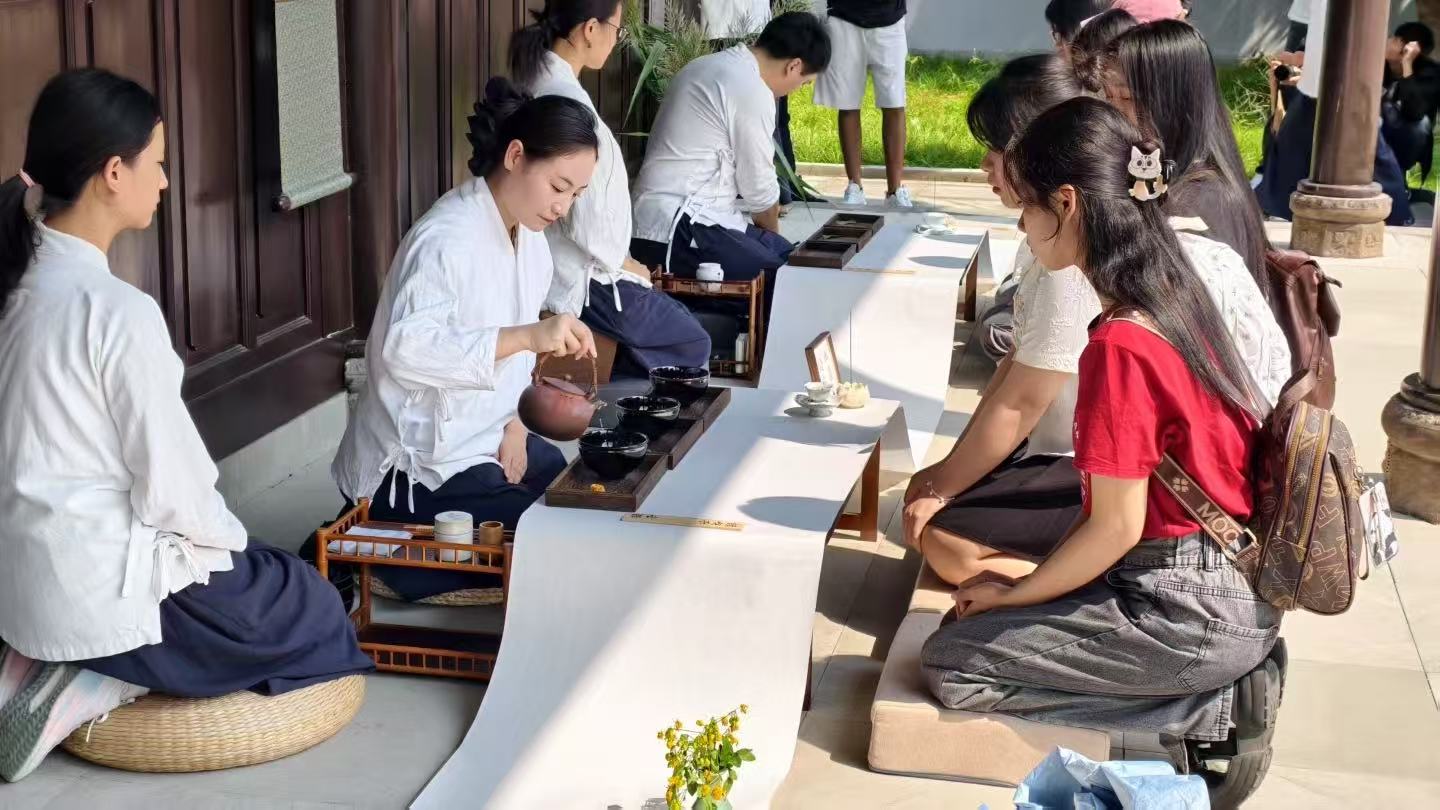
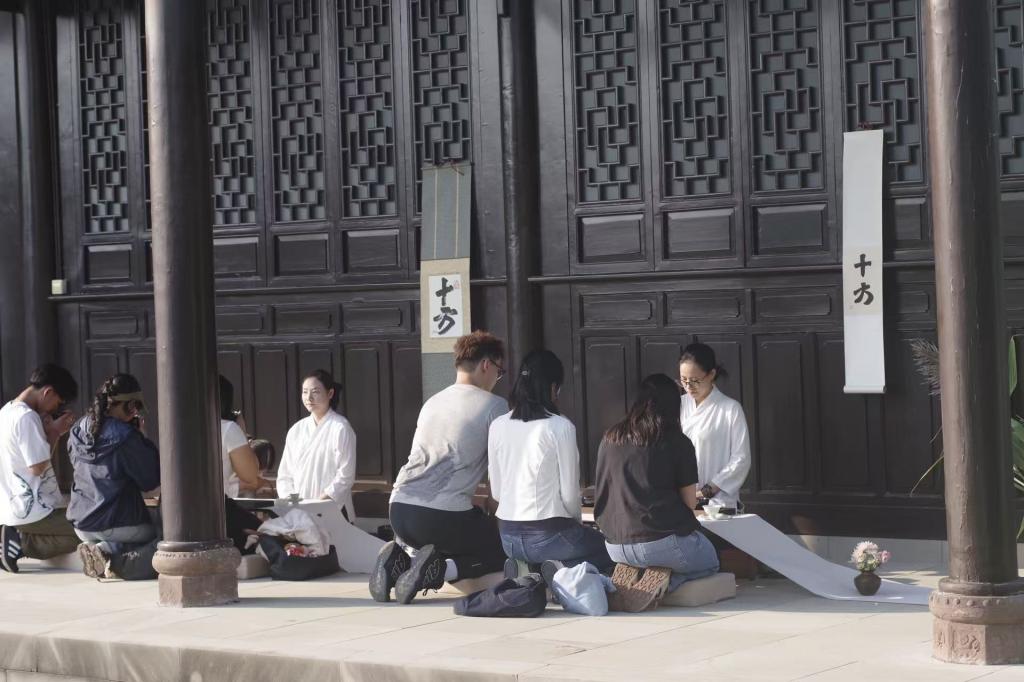
The tea class began in an atmosphere of quiet fragrance, as though gathering an elegant circle across time and space, drawing everyone into a world rich with poetry and thought. The teacher, dressed in simple and refined Chinese clothing, knelt calmly atop a traditional cushion. The students followed suit, listening closely as the instructor explained in detail: "Tea requires your full attention—the water temperature, the timing, the choice of teaware, all matter profoundly." Her voice was soft, like a mountain spring, as she began demonstrating the brewing process. The room soon filled with the subtle aroma of tea, a delicate steam rising gently into the air.
At the teacher’s invitation, the students lifted their cups—first observing the color, then inhaling the fragrance, and finally taking a small sip. As the tea warmed their throats and the steam hovered in the air, time itself seemed to slow into a moment of deep peace and clarity. In that shared experience, they sensed the philosophical ideas at the heart of Chinese tea culture: harmony, respect, purity, and tranquility.
A student from Russia reflected, "The tea ceremony feels like a practice for the soul. While brewing and tasting, it’s as if I’m having a deep conversation with myself—it helps me understand what truly matters in life." Others nodded in agreement. In that small tea room, each person took away their own moment of insight and inspiration.
Cultural Blossoming: Friendship Through Shared Understanding
As one of China's first recognized excellence courses on national conditions education for international students, this program is built upon Confucian and Taoist thought. It breaks down the barrier between "prior knowledge" and "hands-on experience," guiding students through immersive methods like field research to turn traditional philosophy from theory into lived wisdom—deeply integrating knowledge with practice.
Notably, the course's innovative approach has earned wide recognition: two of its cases were selected as 2025 “Study in China” Model Examples in international education management. In addition, partnerships with institutions such as Chongxuan Academy and Shuanghe Village in Jiuzhaigou have helped build educational bases dedicated to helping international students understand China. Together, these form a three-part framework: "theory-practice-base," creating a powerful system for experiential learning.
Through the International Center For Taoist Culture and Art Exchange —co-founded with Chongxuan Academy in Chengdu, the birthplace of Taoist culture—the course combines strong local grounding with a global perspective. It promotes the cross-cultural exchange of traditional wisdom such as Taoist thought, encouraging students to extend their personal insights into a broader engagement with Chinese culture. In doing so, the program sets a benchmark in national conditions education, showcasing the contemporary value of Chinese civilization in today’s global dialogue.