Source: Publicity Department of the CPC Committee (News Center)
On July 26th, the Chengdu World Games torch relay was officially launched. This marks the first torch relay in the history of the World Games. The route connects six iconic locations: the ancient Shu civilization lights at Sanxingdui, the brilliant Jinsha ruins, the ecological home at the Panda Base, the Three Kingdoms legacy at Wuhou Shrine, the poetic elegance of Su Dongpo at the Three Su Temple, and finally, the vibrant scene of a park city at Xinglong Lake. With six stops and 120 torchbearers, the journey beautifully links Chengdu's civilizational origins with its modern future.
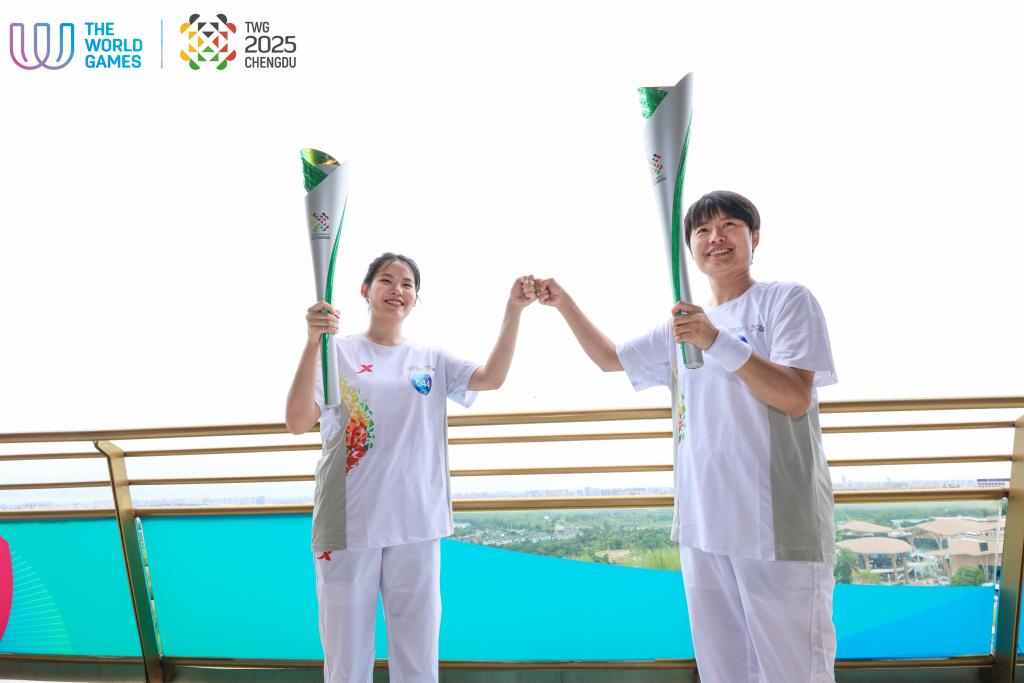
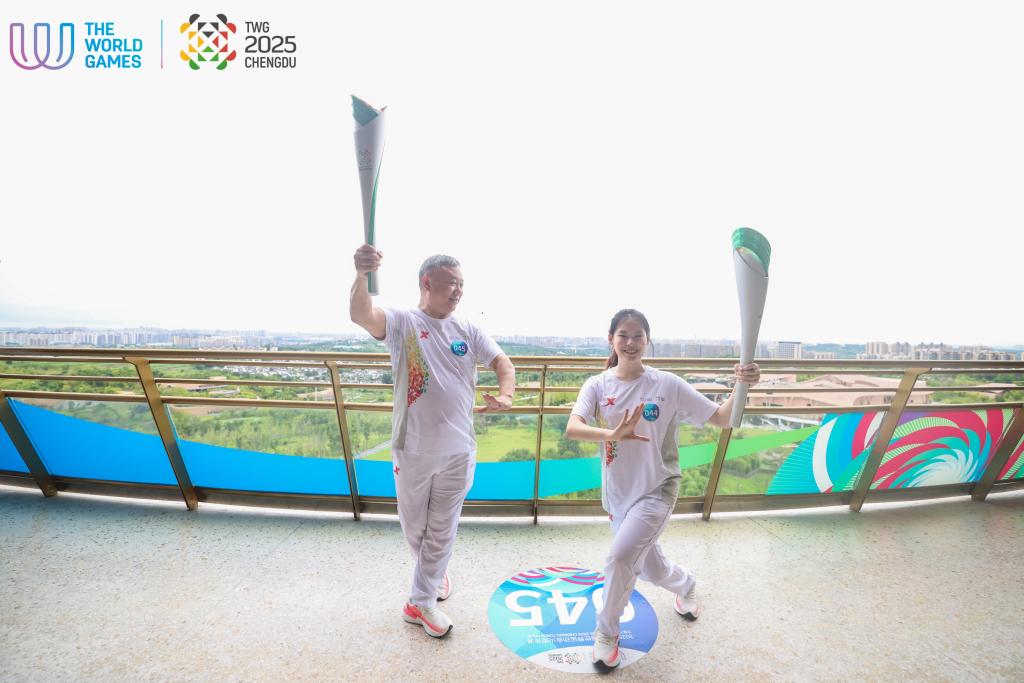
At the Chengdu Research Base of Giant Panda Breeding, Ong Xin Ning, a Malaysian student from our university majoring in Radio and Television Editing(Class of 2023), served as the 44th torchbearer. She received the symbolic torch of peace and friendship from Zhao Hailing, a National Rural Youth Leader in Prosperity, and passed it to Tang Guoliang, the provincial representative inheritor of Sichuan Northern Puppetry. This brief relay of several dozen meters connected distinct narratives: rural revitalization, intangible cultural heritage, and the spirit of international youth.
"From scientists and athletes to ride-hailing drivers, and even Jackie Chan, whom Malaysians are so familiar with – people from all walks of life were passing the torch. As a Malaysian international student, I feel incredibly lucky to be part of this!" After completing her segment, Ong Xin Ning shared her personal feeling of an "open China" with reporters: "Here, everyone can be a participant in this grand event."
Passing the Torch from the Universiade, Racing Toward Dreams
In July 2023, the 31st World University Games were held in Chengdu. When the torch relay reached its final point at the Dong'an Lake Sports Park, the main stadium of the Chengdu Universiade, the moment our Laotian student Nounbaikham Moukpalakham carried the flame as the 109th torchbearer was replayed on the college's large screens and official social media. Seeing this after entering university, Ong Xin Ning imagined that one day she, too, could hold the torch high and have her own moment.
The Chengdu World Games are the first edition to be held in mainland China and, after the Chengdu Universiade, the second major international multi-sport event hosted by China's western region. Upon learning about the recruitment of torchbearers for the World Games, Ong Xin Ning immediately submitted her application. While waiting for the result, she felt she wasn't outstanding enough and her chances were slim. But an unexpected call lit up that afternoon: "Student Ong Xin Ning, congratulations on being selected as a torchbearer for the Chengdu World Games." She initially wanted to share the good news immediately with family and friends, but the drafted messages in her chats were eventually deleted. She decided instead to remind them to tune in to the live broadcast of the torch relay on time: "I want to give them a huge surprise!"
As a university student torchbearer, Ong Xin Ning understood the weight of responsibility on her shoulders. She began preparing a month in advance, doing aerobic exercises each morning after waking up on an empty stomach and strength training in the evenings, striving to meet the World Games in her best condition. "I believe torchbearers carry not just the flame, but also the inclusive spirit of sports embodied in the Chengdu World Games motto 'Sports Unlimited, Wonders Beyond,' which celebrates harmony in diversity."
Ong Xin Ning started learning martial arts at the age of 15. Martial arts made its debut as an invited sport at the 2009 Kaohsiung World Games and will, for the first time, become an official medal event in Chengdu. The sport includes two disciplines: Sanda (combat) and Taolu (forms). Ong Xin Ning's younger sister has also been practicing Taolu and hopes to earn a place on the Malaysian national team through hard work. "We are both really looking forward to the martial arts competitions at these Chengdu World Games."

Chengdu University: My Home Away From Home
"At Chengdu University, I feel the warmth of 'home'."
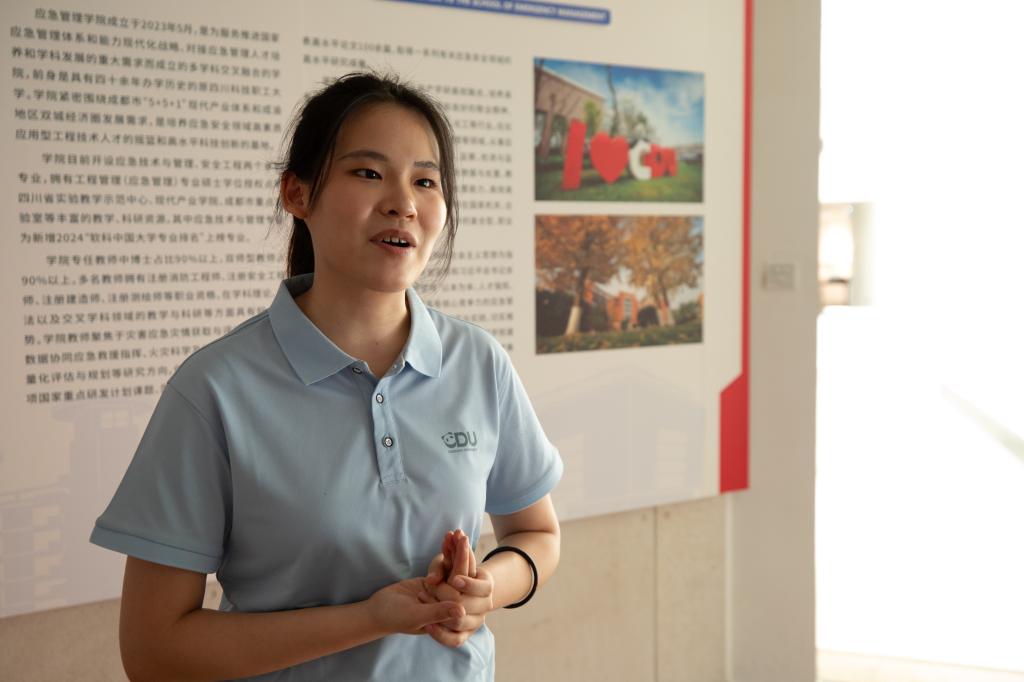
In high school, Ong Xin Ning developed a strong interest in video shooting and editing, gaining experience through her school media club. After graduation, through an agency, she learned about the Radio and Television Editing program at Chengdu University — a well-regarded major with a beautiful campus and friendly policies for international students. "My parents fully supported my decision to study in China; they hoped I would broaden my horizons and gain new experiences." After careful discussion with her family, she applied to Chengdu University.
In September, admitted and excited, she traveled to the place of her dreams. Coming to the unfamiliar city of Chengdu from over 3,000 kilometers away in Malaysia, she felt deeply uncertain. But her head teacher, Feng Yubing, eased those worries: "You can call me Mommy. I hope you’ll think of me as family here in China. If you have any problems, you can always talk to me." Whether it was helping patiently with visa issues, encouraging students to take part in competitions, or supporting her in seizing the chance to become a Chengdu World Games torchbearer, Miss. Feng was there. "I used to overthink and was really afraid of making mistakes. Without her guidance, I might not have found the courage to step out of my comfort zone."
During her freshman year, Ong Xin Ning also joined the International Student Support Team, helping organize major events for International Department of College of Chinese & ASEAN Arts and assisting with visits by foreign delegates. In 2023, to prepare nasi lemak — a classic Malaysian dish — for the International Art and Culture Exchange Festival, she and her friends started cooking at 6:30 in the morning. "It made me so happy to see how much the Chinese students loved our nasi lemak."
Adapting to the local Chengdu food wasn’t a problem for her. She quickly grew to love the "intensely numbing and spicy" flavors of Sichuan cuisine. "The food here is so delicious! Laziji, chuànchuàn xiāng, hot pot…" In her first year, she gained five kilograms. "But I still can only handle mild spice in hot pot." However, the local Sichuan dialect proved a much bigger challenge.
As a fourth-generation Malaysian of Chinese descent, Ong Xin Ning was often mistaken for a local by canteen staff. The staff would speak to her in rapid Sichuan dialect, leaving her struggling to understand. Over two years of living and studying at Chengdu University, surrounded by teachers and classmates who often used Sichuan dialect, she gradually came to appreciate its charm. She began actively learning pronunciation and common phrases from those around her and slowly started speaking Sichuan dialect herself. Now, when she eats something especially delicious, she’ll even exclaim in genuine local fashion: “Bashi dehen! (So comforting!)”
A Camera in Hand, a Torch for Culture
Ong Xin Ning grew up immersed in the richness of traditional Chinese culture. After coming to China to study, she leveraged her academic skills to tell stories of international student life through short videos and support the promotion of intangible cultural heritage. Her videos New Chengdu Youth on the Silk Road and When a 'Foreigner' Meets Qingshen Bamboo Weaving have been featured across multiple platforms and have won several awards, including the Excellence Award in the 4th China-ASEAN Friendship and Cooperation Short Video Competition, the National Excellence Award in the "My Beautiful Encounter with China" contest, and second prize in the Panda Reporter Short Video Competition.
"Their relentless pursuit of perfection in craftsmanship deeply moved me." While filming the Chinese intangible cultural heritage of Qingshen bamboo weaving, Ong Xin Ning was struck by the artisans' dedication. Master Yin and his daughter, inheritors of the craft, collaborated with Master Liu, who specialized in creating dragon frames, to take on the challenge of weaving a 99-meter-long bamboo dragon. They had previously set a Guinness World Record with an 80-meter bamboo dragon. Selecting bamboo, sawing, splitting into strips, arranging materials, cutting, and bending—each step was essential and demanded immense patience from the makers. "I hope more and more people will come to understand and love China's intangible cultural heritage," Ong Xin Ning said, "so that these outstanding traditional crafts can be passed down and continue to evolve."
On July 17th this year, the mutual visa exemption agreement between China and Malaysia officially took effect, allowing citizens of both countries to stay for up to 30 days without a visa. Ong Xin Ning was delighted by the news: "This means the connection between China and Malaysia will grow even stronger." She expressed her strong hope that more Malaysians will come to Chengdu to watch the World Games events and experience the city's relaxed, slow-paced life in places like Kuanzhai Alley and Yulin Road, immersing themselves in traditional Chinese culture like Sichuan Opera face-changing. "One important tip: don’t throw away your Chengdu World Games tickets! With the growing 'ticket stub economy' in China, those tickets can get you discounts at many restaurants and scenic spots."
After completing her role as a torchbearer for the Chengdu World Games, Ong Xin Ning will continue her involvement as a youth volunteer for the event. She said, "I look forward to using my camera as a torch—to convey warmth and hospitality while serving guests from around the world, and to pass the flame of China's stories onward globally.
(Partial content sourced from China News Service)