From November 4 to 6, as the core content of the fine arts and design section of the 2025 International Culture and Art Exchange Festival, experts from Estonia, Germany and Cyprus delivered three high-end lectures to teachers and students. Centering on the core theme of "Deepening Civilization Mutual Learning, Empowering Professional Growth, and Inheriting Cultural Roots", the lectures focused on the cross-border integration of mythological philosophy, practical design, and intelligent digital technology.
11.4 14:00 | Estonia: Unlocking the Artistic Personality of Tin with the Kratt as the Key
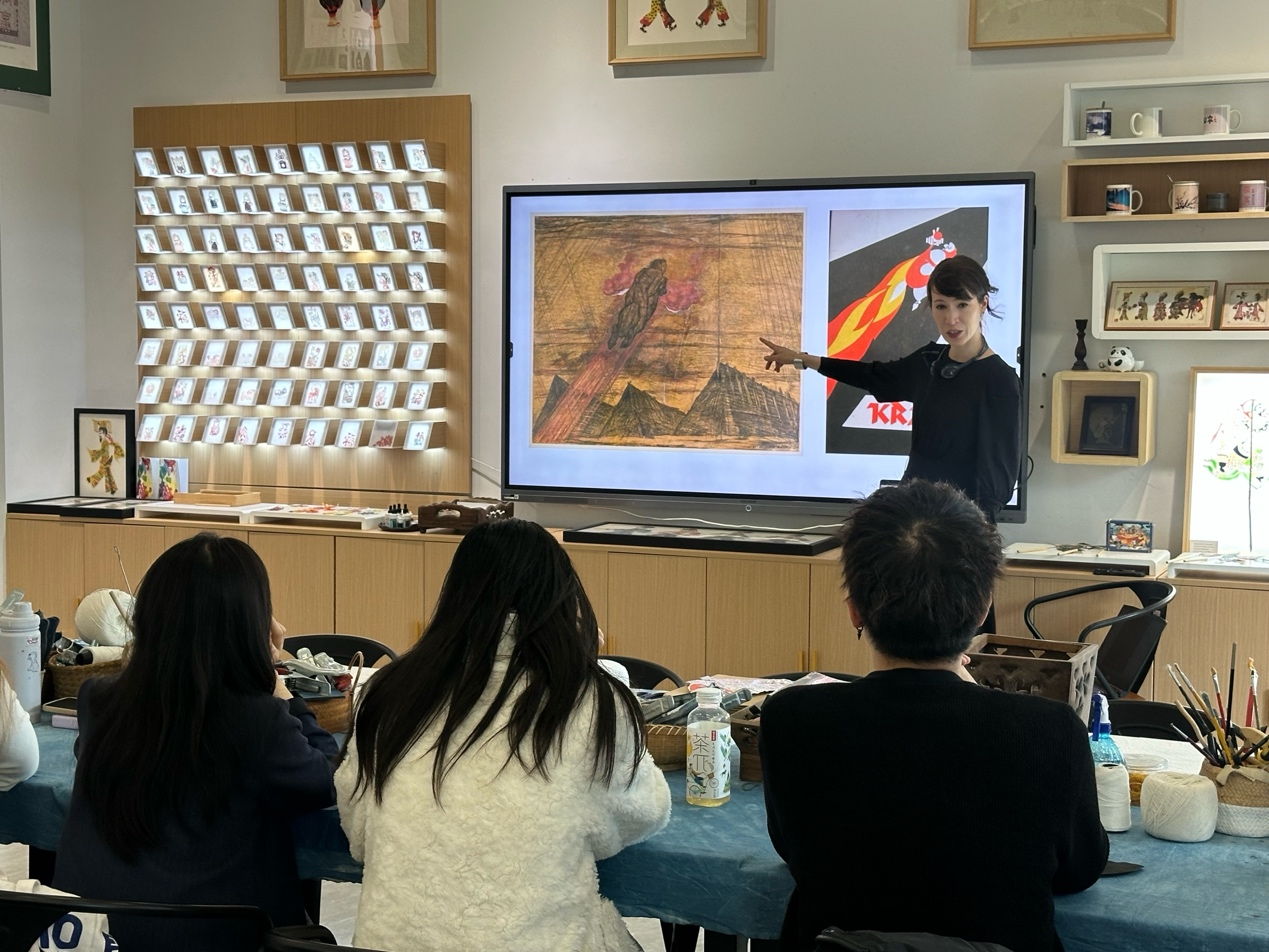
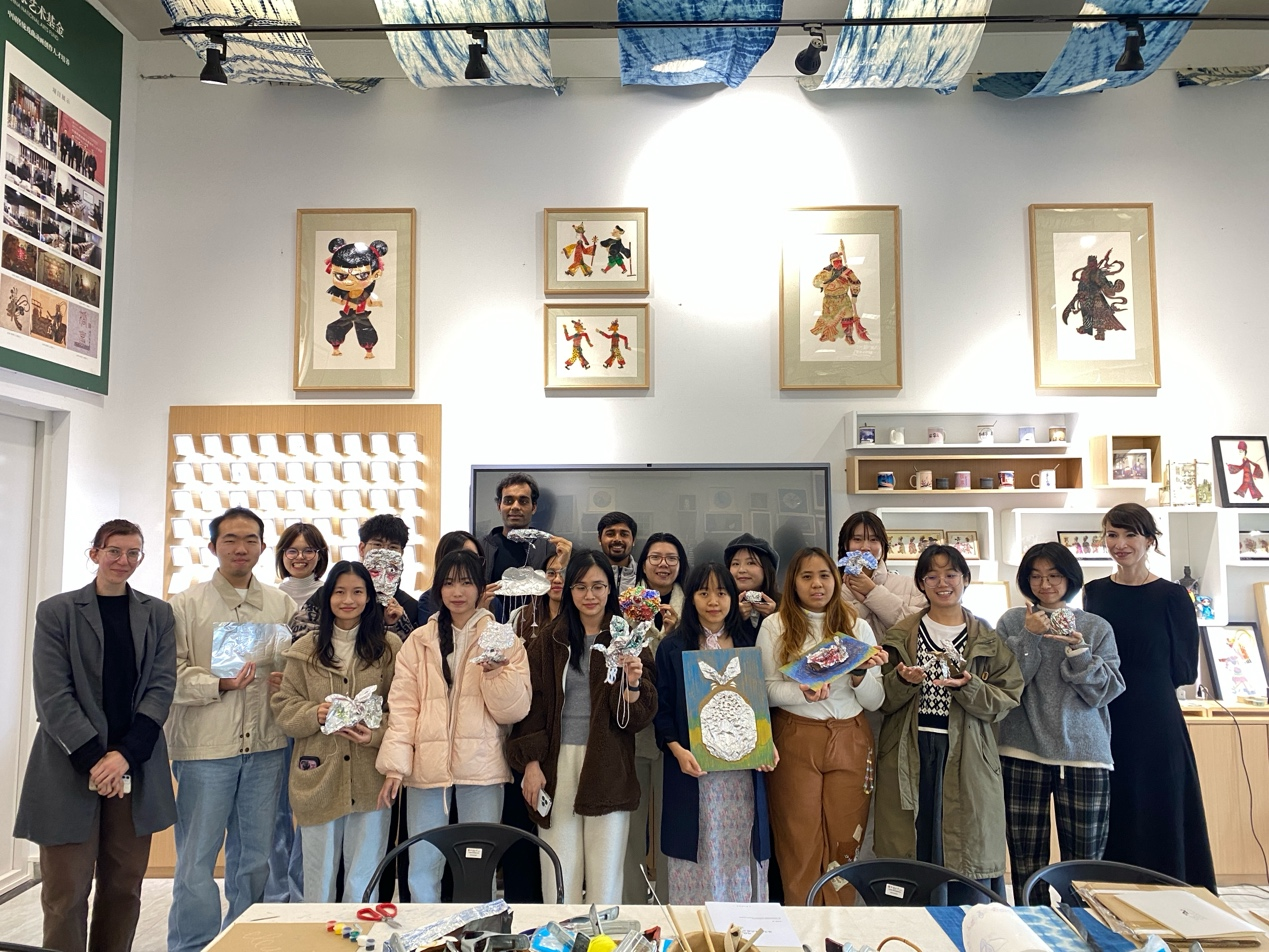
On November 4, Anna Škodenko from Estonia delivered a workshop themed Creating the Kratt: Material, Myth, and the Agency of Art at E1001, School of Fine Arts and Design, College of Chinese & ASEAN Arts. Taking a classic local folk tale as the starting point, she cleverly connected the core logic of materials science and artistic creation. First, she unpacked the profound connotation of the "Kratt": this mysterious creature in Nordic mythology is actually the crystallization of the working people’s wisdom — much like an ancient "working robot", it can follow instructions to complete all kinds of tedious tasks. In Anna’s personal interpretation, materials bear a striking resemblance to the Kratt: "A material is just like a Kratt. It can help artists realize their ideas, but it must be presented based on its own characteristics." She further gave an example: just as some Kratts are not satisfactory in specific tasks, materials cannot fully replicate an artist’s imagination. Only by thoroughly understanding the "personality" of a material — its texture, toughness, and plasticity — can it become a powerful assistant in creation, rather than an obstacle.
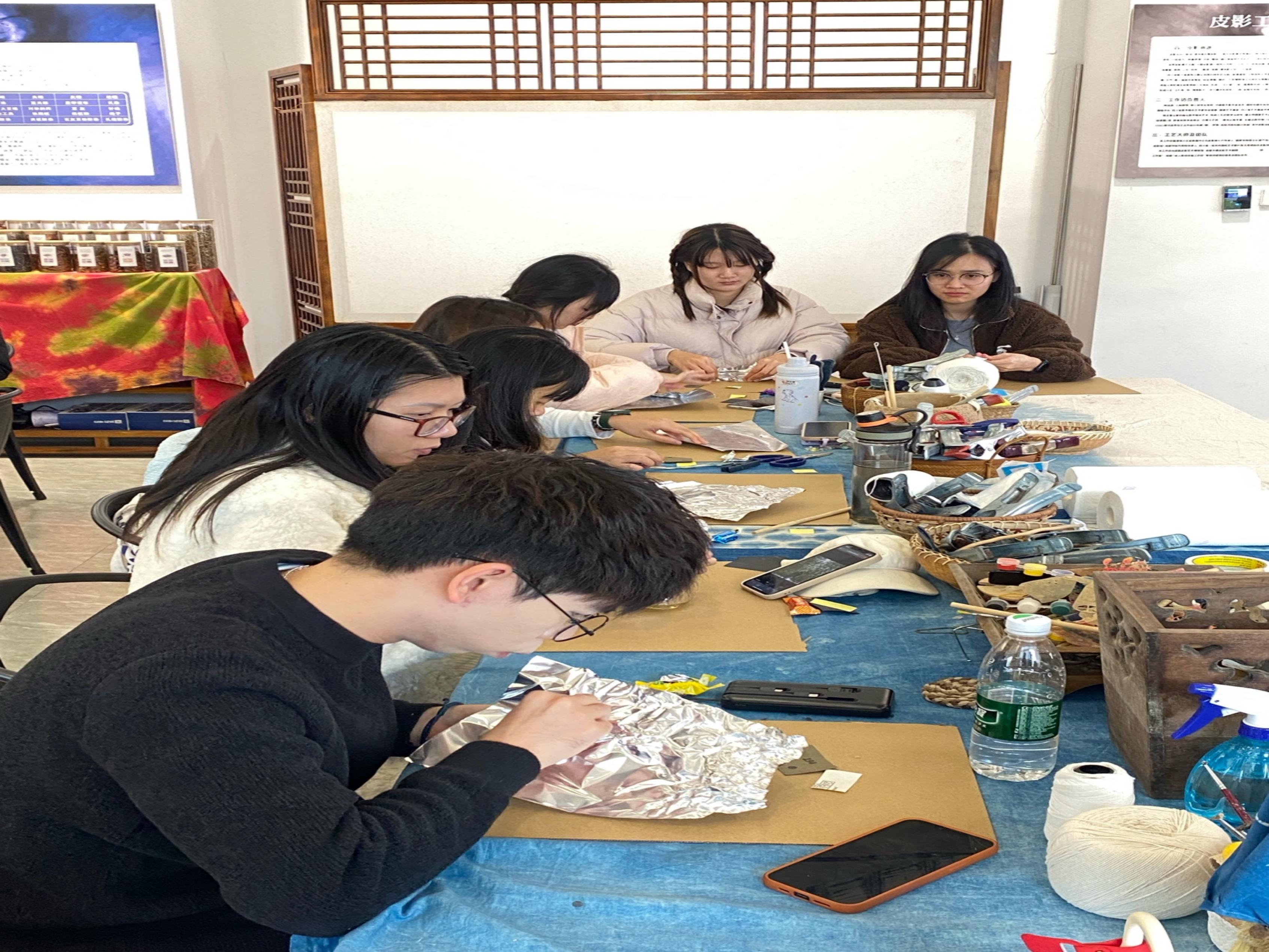
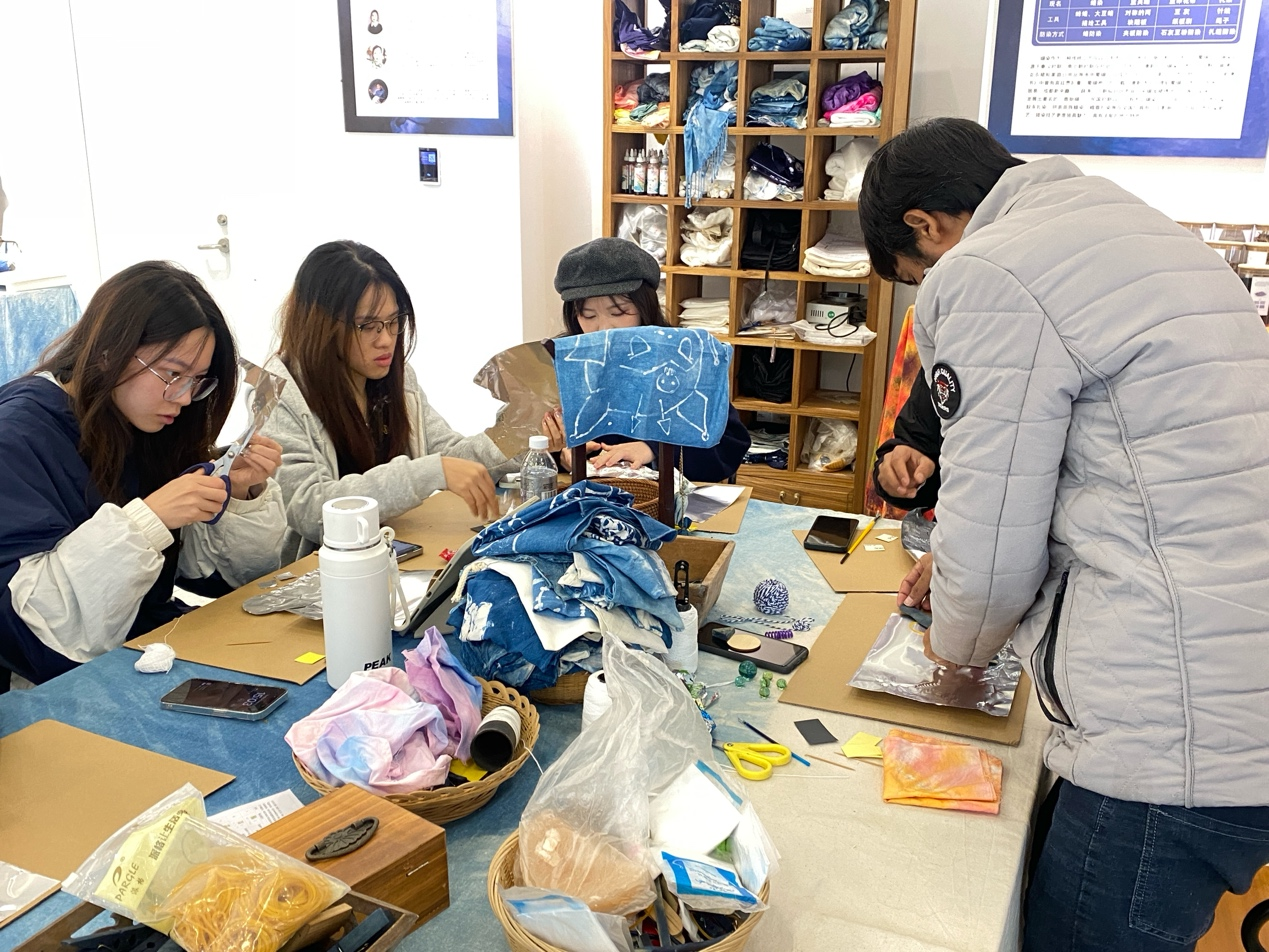
In the second half of the workshop, Anna handed over the initiative of creation to the students, designating tin as the medium for exploration. The students carried out immersive experiments around the characteristics of tin, feeling its softness, luster, and ductility through touching, bending, and shaping. Some used the easy processability of tin to create three-dimensional forms, while others used its metallic texture to convey abstract expressions. Eventually, they combined their understanding of the material with personal creativity, each completing a unique artwork. This truly realized the goal of "empowering creativity through the personality of materials".
11.5 10:30 | Germany: From Creative Sparks to Profitable Implementation, Unlocking the Codes of Practical Design
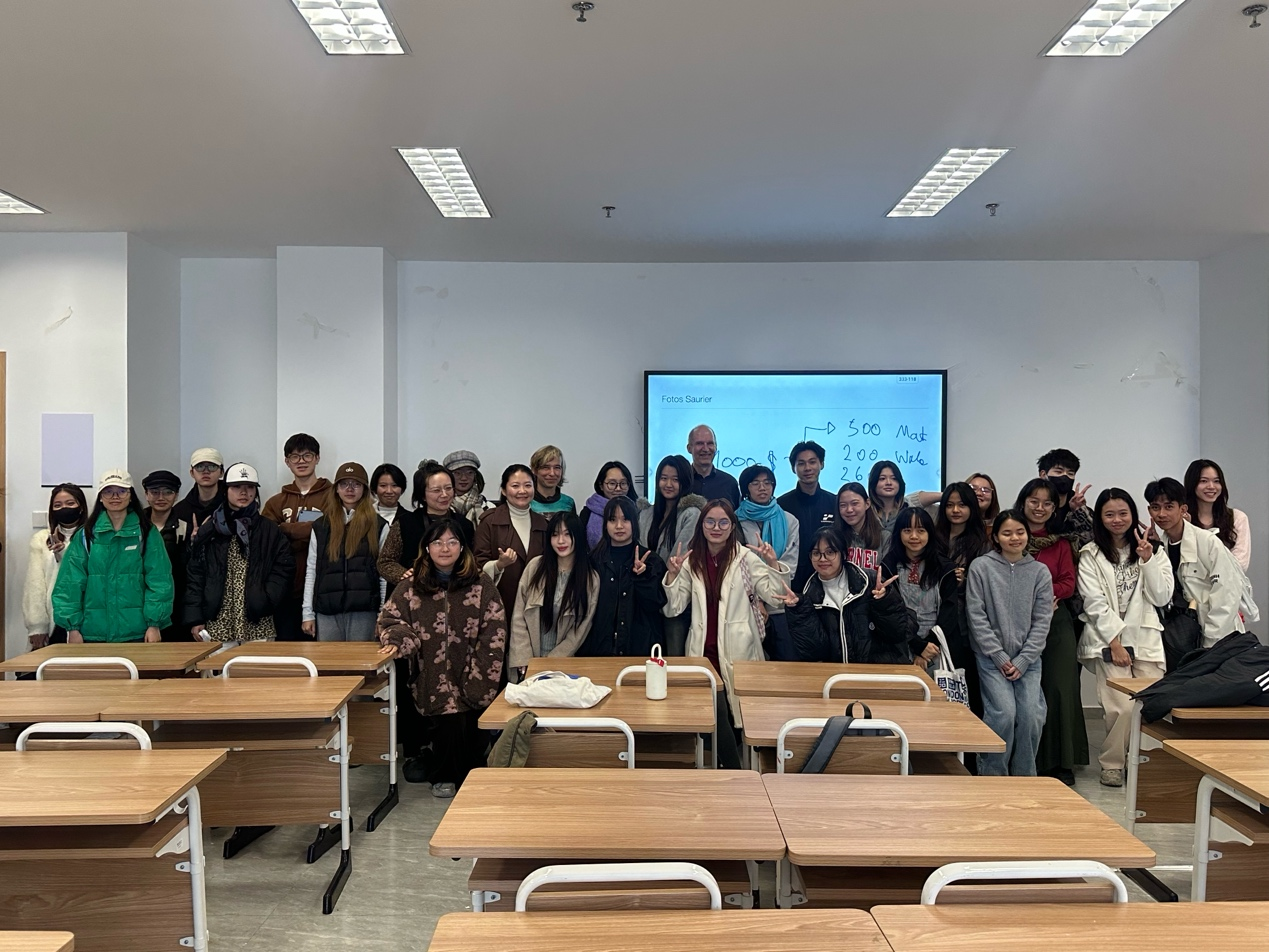
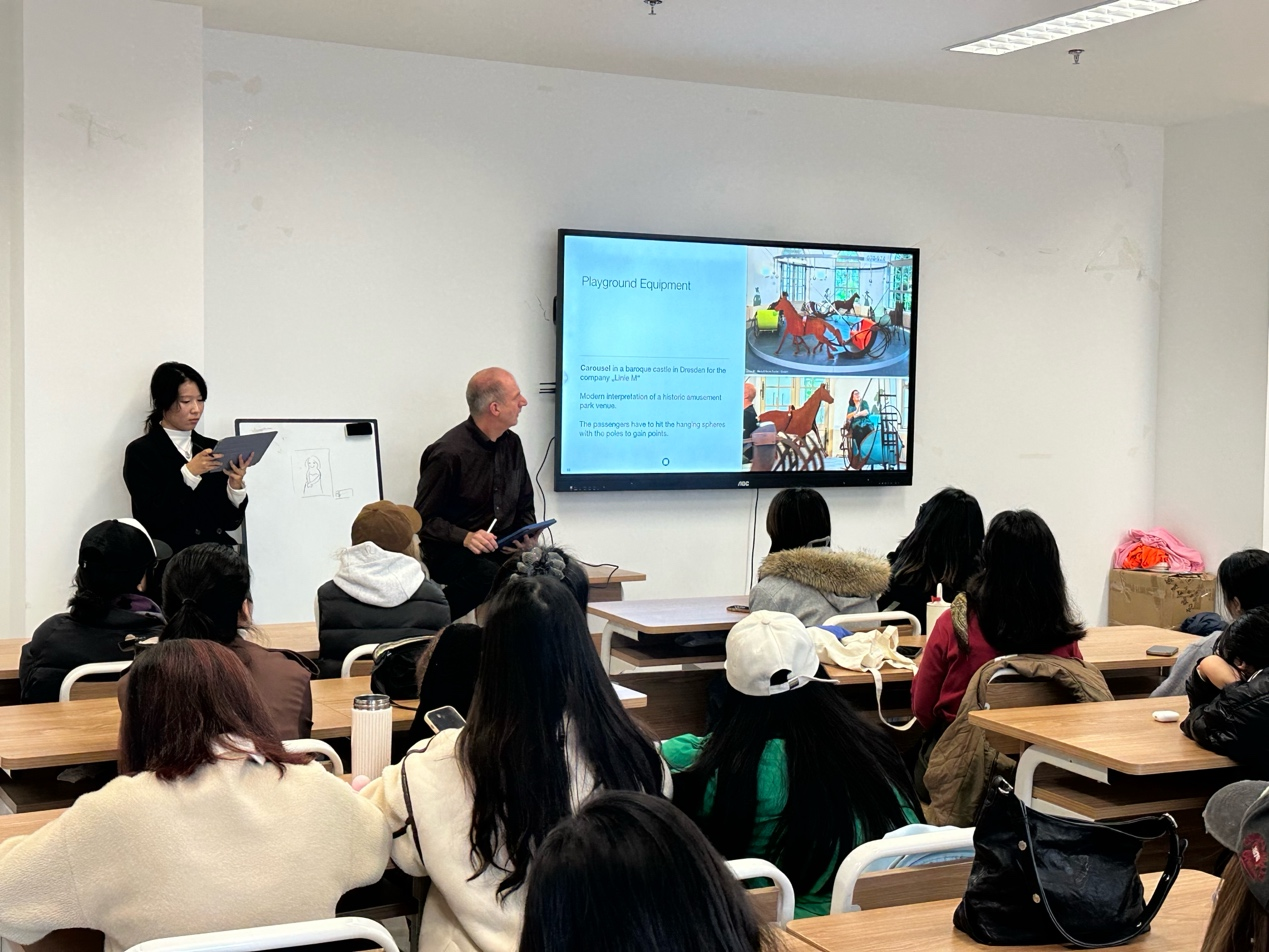
On November 5, German designer MATTHIAS SCHIFFKE delivered a workshop at E5017, School of Fine Arts and Design, College of Chinese & ASEAN Arts. Focusing on the core theme of Practical Design of Children’s Play Facilities, he shared rich project cases ranging from theme parks to museums. He deeply dissected the design logic: how to accurately interpret project themes, quickly transform abstract ideas into paper-based plans, and the crucial optimization stage — under the premise of strictly ensuring children’s safety, how to achieve a deep integration of facility functions and thematic expression. Every detail reflects the designer’s professional considerations.
After the work presentation, the Q&A session was packed with practical insights. Participants raised questions on core topics such as "the coordination and game between artists, capital, and manufacturers", "sustainable sources of design inspiration", and "communication difficulties in project implementation". Combining his own experience, MATTHIAS answered each question one by one. He not only revealed the practical skills for "balancing ideals and reality" in the design industry, but also shared the implementation ideas from market demand to profit models, enabling everyone to gain a more comprehensive understanding of the commercial logic, social value, and creative freedom of design.
11.6 15:00 | Cyprus: Starting from the Side, Safeguarding Cultural Roots with Digital Technology
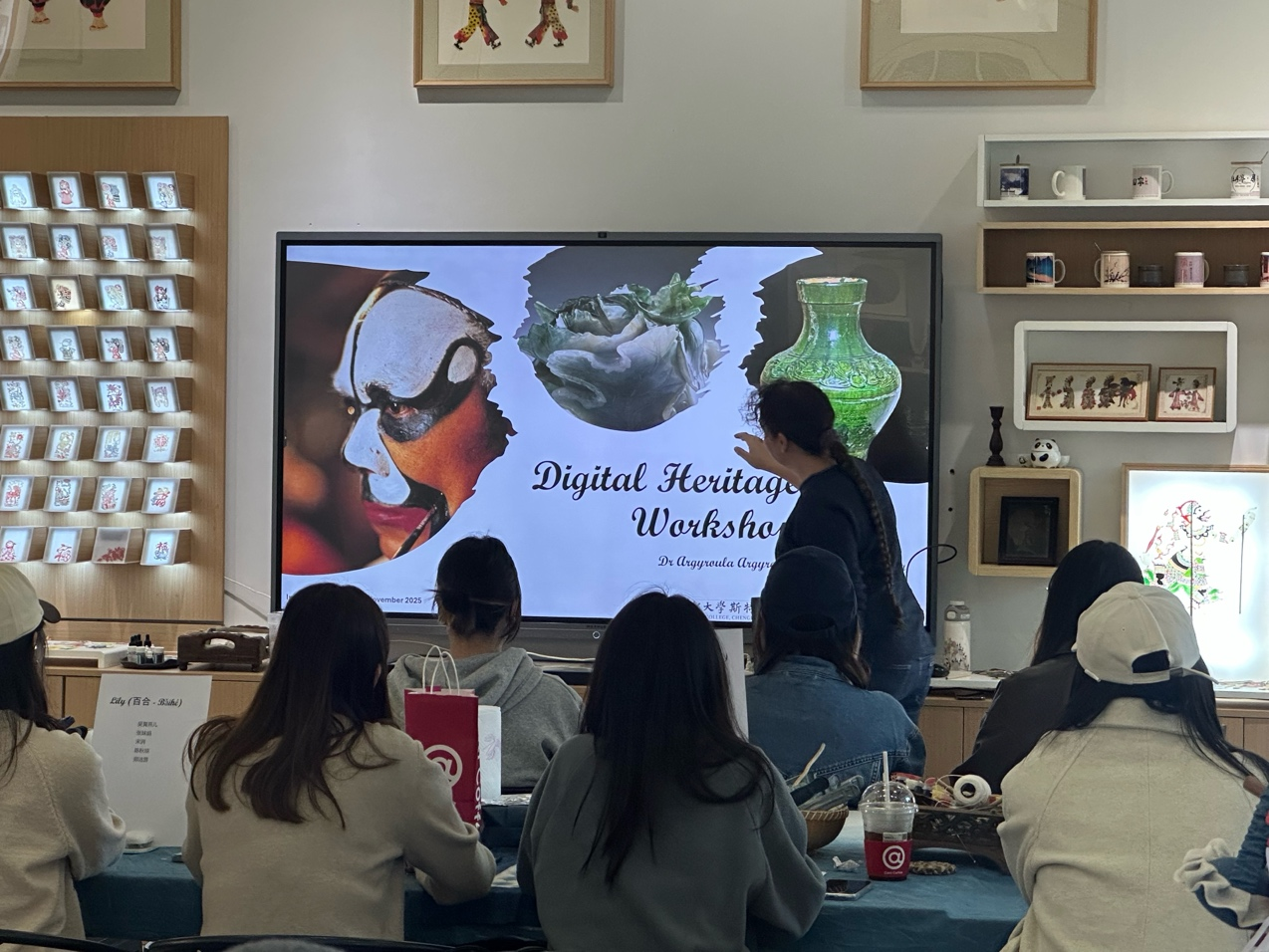
On November 6, the Digital Heritage workshop delivered by Cypriot foreign expert Dr. Argyroula Argyrou for first-year students was held at E1001, School of Fine Arts and Design, College of Chinese & ASEAN Arts. Centering on the core concept of "Rooting in Oneself and Safeguarding the Heritage Around Us", the workshop redefined the connection between digital technology and cultural protection. Breaking the inherent perception that "cultural heritage equals distant historic sites", it guided the students to first explore inward: What ancient buildings in your hometown are on the verge of being forgotten? Are your grandmother’s handicraft skills and the traditional festivals of your hometown part of the intangible heritage worthy of being cherished? Starting from their personal growth experiences, the students rediscovered the neglected cultural treasures around them.
On this basis, Dr. Argyroula Argyrou introduced practical methods for digital protection: using 3D software to reconstruct the structure of old houses in their hometowns, employing image editing tools to record the processes of traditional craftsmanship, and building personalized heritage protection frameworks with reference to the standards of the United Nations Educational, Scientific and Cultural Organization (UNESCO). In the project sharing session of the second part, the students took turns to share their stories with the cultural heritage around them — some wanted to digitally record the ancient bridges in their hometowns, while others planned to use virtual technology to reconstruct traditional handicrafts. Dr. Argyroula Argyrou provided professional analysis for each proposal one by one, and encouraged everyone to, as "first-hand witnesses", endow the cultural heritage around them with eternal vitality through digital means.
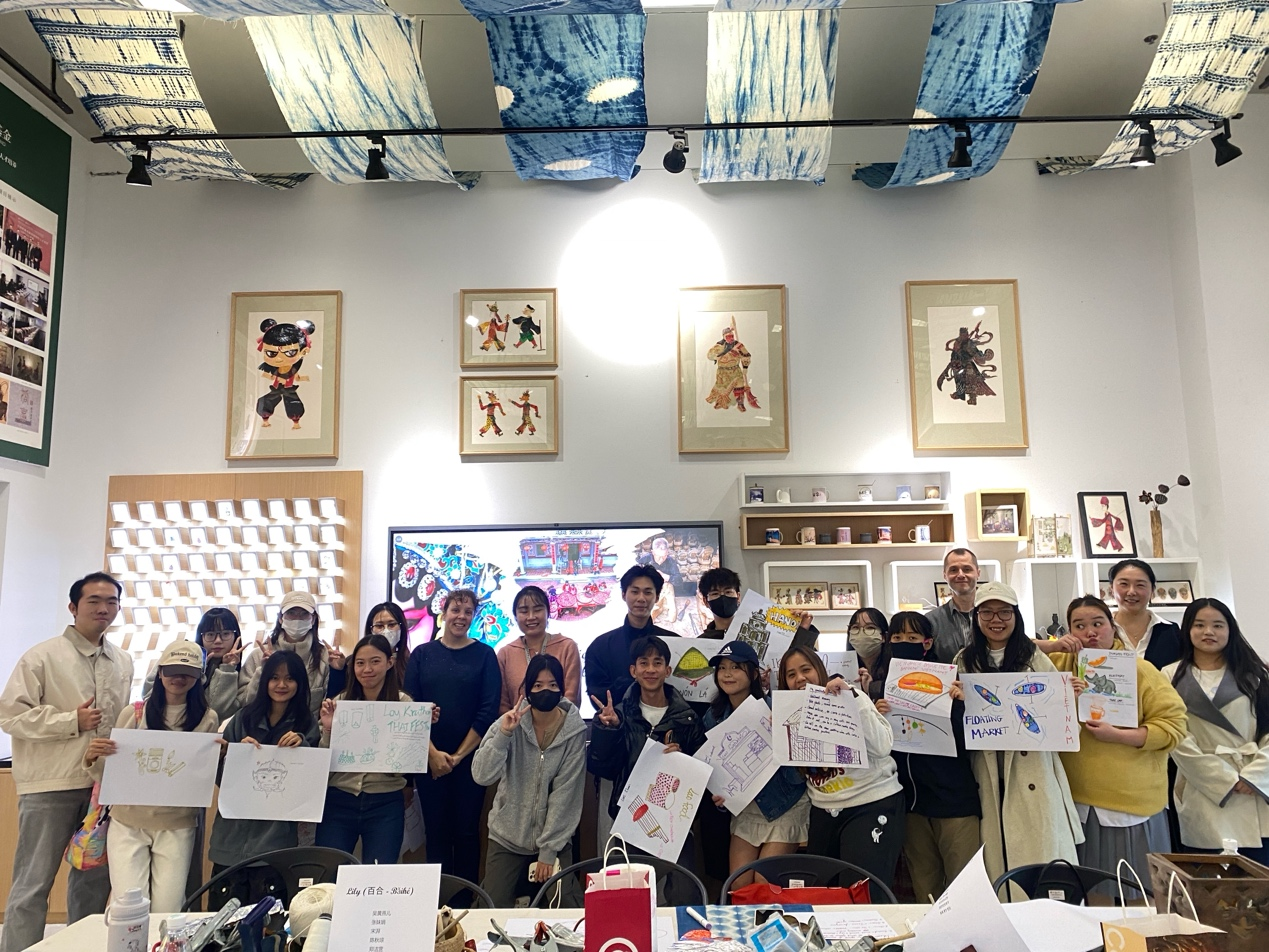
Focusing on three major fields of art, design, and cultural heritage, the three activities have built a high-quality international art exchange bridge for teachers and students, promoted cross-cultural professional collaboration, broadened international academic horizons and innovative thinking, supported the international growth of young talents in the fields of artistic creation, spatial design, and cultural heritage protection, and created a high-quality international exchange platform integrating theory and practice for participants.