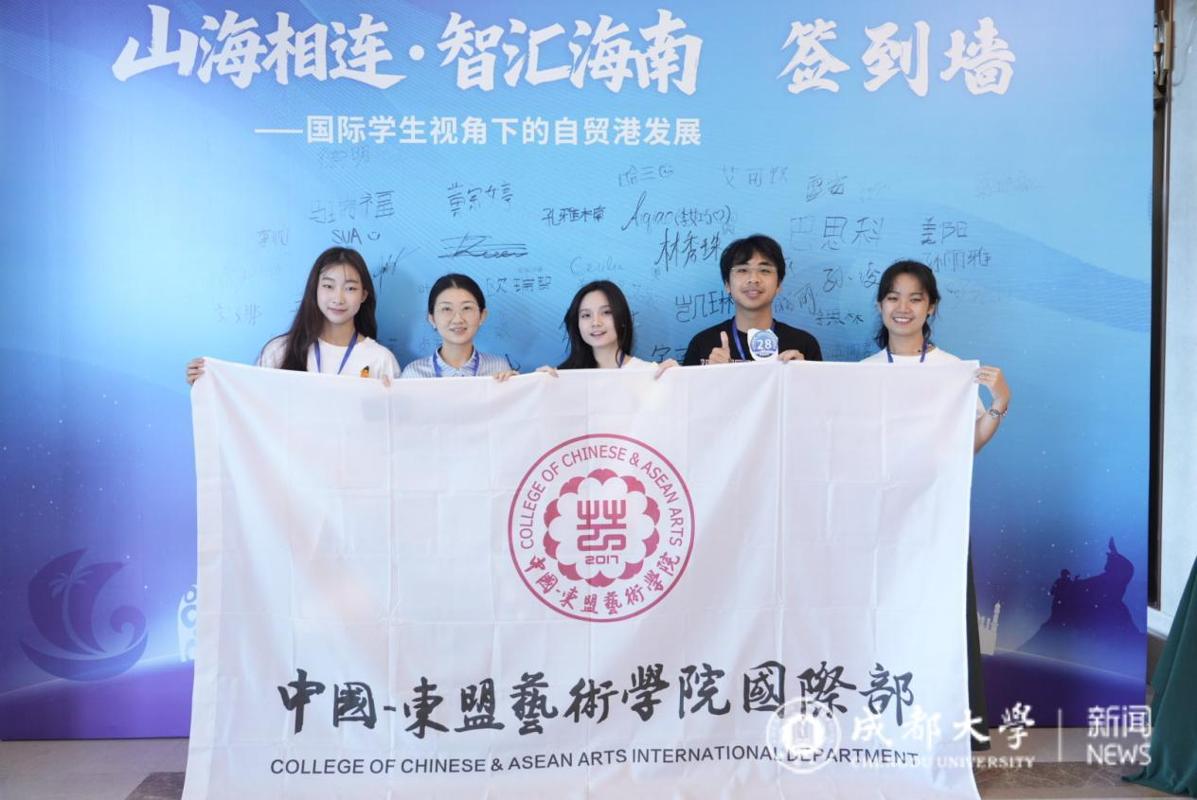
On November 7, 2025, the 2nd 2025 Hainan International Students Academic Exchange Activity themed "Mountains and Seas Connected · Wisdom Gathered in Hainan: Hainan Free Trade Port Development from the Perspective of International Students" successfully concluded in Sanya. Co-hosted by Sanya International Cultural Exchange Center and Hainan Tropical Ocean University, the activity selected finalists through multiple preliminary rounds. Eventually, 12 universities including Hainan Tropical Ocean University, Chengdu University, Shanghai University, and Inner Mongolia Medical University advanced to the final, with 29 international students from 14 countries such as Russia, Kazakhstan, and Thailand shortlisted.
International Department of College of Chinese & ASEAN Arts, Chengdu University, organized preliminary selections for international students across the university. Four international students stood out and represented Chengdu University in the final.
In the final, Vietnamese international student Nguyen Quang Huy won the first prize with a high score of 9.27; Malaysian international student Low Kah Wai and Thai international student Kwanjira Sae-Lee won the second prize; Vietnamese international student Trinh Tuong Vi won the third prize. Teachers Wu Jiapei and Liu Qidong from International Department carefully tapped into the students' potential, aligned with their research interests and personal characteristics, and focused on four core directions: Sino-Vietnamese character comparison, park city construction, traditional cultural genes, and humanized urban development. They provided full-process meticulous guidance to help students sort out their observations and reflections on life in China, ultimately enabling the students to put forward suggestions for urban development from a cross-cultural perspective. This fully demonstrated the leading role of teachers from International Department in talent cultivation and cross-cultural exchanges. The two teachers also won the Excellent Instructor Award.
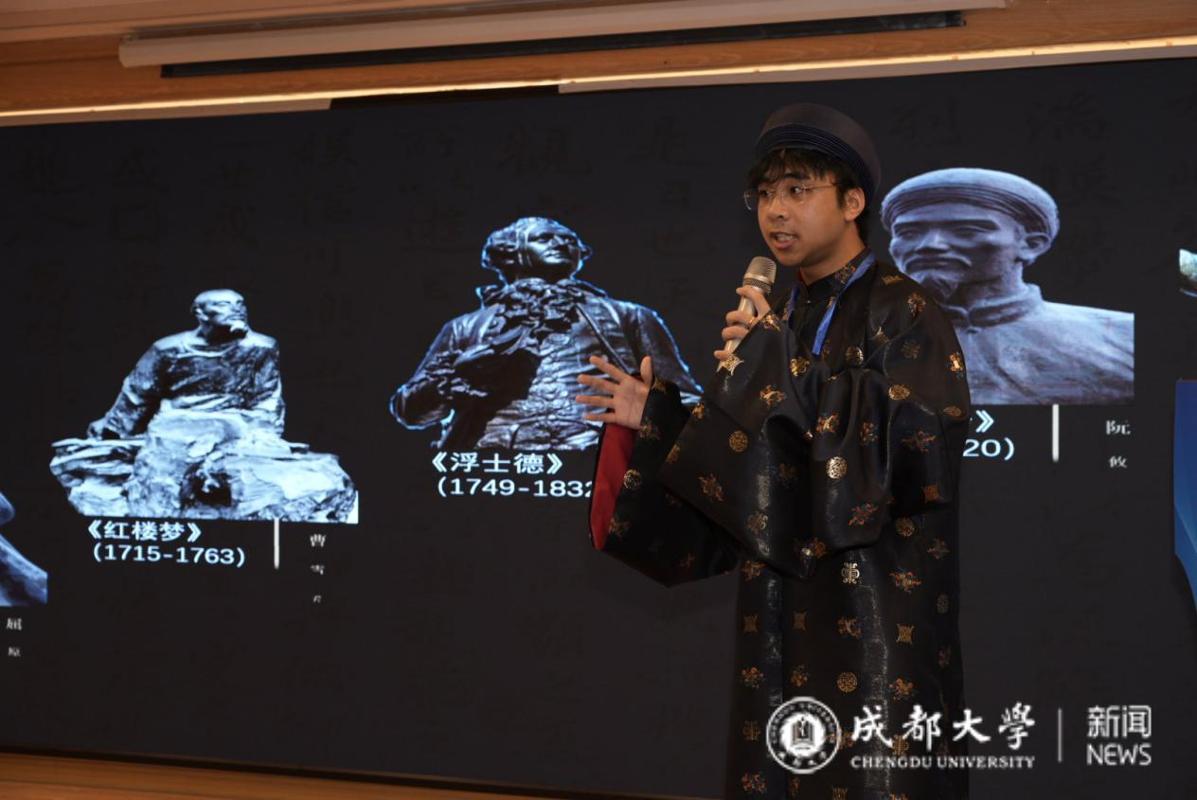
Chinese Characters and Chữ Nôm: A Millennium of Civilizational Resonance
Vietnamese international student Nguyen Quang Huy delivered a speech titled Chinese Characters and Chữ Nôm, delving deep into the blood ties between the two countries’ writing systems. He elaborated on the formation process of Chữ Nôm, which adopted the pictophonetic and associative compound character-creation methods of Chinese characters, allowing the audience to intuitively perceive the origin of the two scripts. In his speech, he also shared the story of Vietnamese poet Nguyễn Du—who, influenced by Qu Yuan and Du Fu, adapted the Chinese novel The Tale of Kiều into a 3,254-line classic Vietnamese narrative poem. Combining his thoughts and experiences in China, he vividly interpreted the connotation of civilizational mutual learning embodied in the phrase "Mountains and seas separate us, but the moon and wind share the same sky." His excellent Chinese pronunciation was praised as "standard broadcasting style," and his clear and powerful expression, coupled with solid academic preparation, enabled him to successfully claim the first prize in the speech contest.
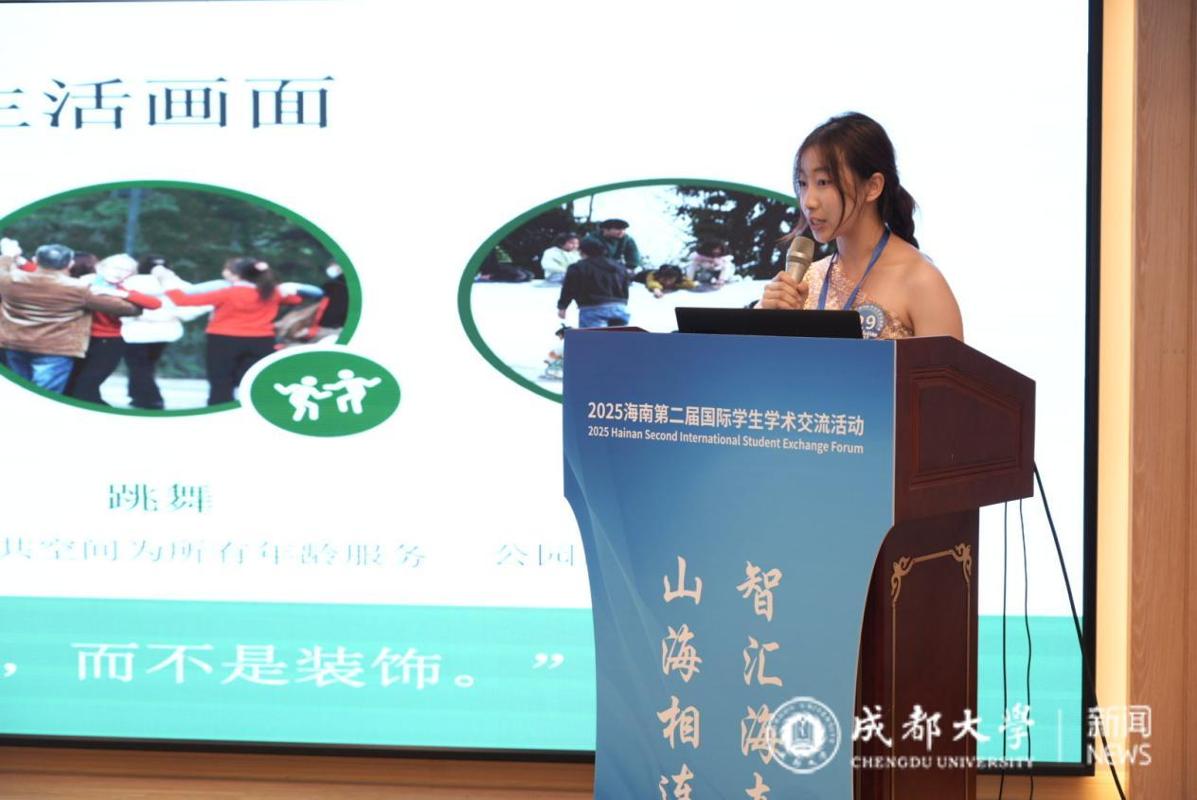
Park City: Harmonious Coexistence Between Humans and Nature
Thai international student Kwanjira Sae-Lee delivered a speech themed Park City, sharing her personal experiences in Chengdu, Chiang Mai, and Sanya. With vivid scenes of "drinking tea and chatting, children playing, and Sichuan Opera singing" in Chengdu People’s Park, she pinpointed the core characteristic of parks—"they are part of life, not just decorations." Here, parks serve not only as spaces for community communication but also as natural playgrounds friendly to all age groups. By comparing the environmental change of Chiang Mai from "gentle greenery" to "grey noise," she highlighted the urgency of ecological protection. Taking the practices of Sanya’s coastal shelterbelts and the promotion of new energy vehicles as examples, she further explained the core values of a park city: "solving big-city problems, sharing public spaces, and protecting natural resources." Her down-to-earth observations and warm expression earned her the second prize.
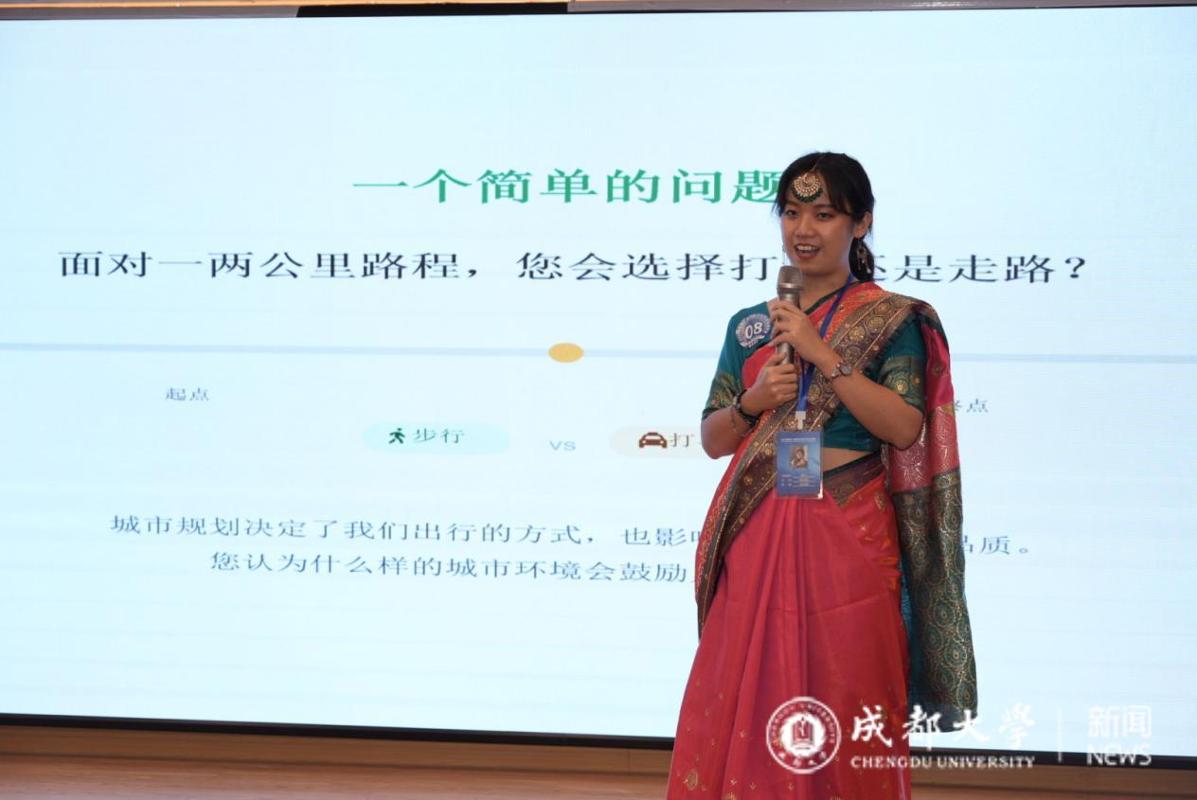
Urban Right to Walk: Reflections on People-Centered Development
Malaysian international student Low Kah Wai delivered a speech titled From Malaysia to Chengdu to Hainan – The Urban "Right to Walk" in My Eyes. Starting with the daily question of "choosing to take a taxi or walk for a one or two-kilometer journey," she triggered in-depth thinking on urban planning. Drawing on her experience of "walking as a norm and travel with warmth" brought by Chengdu Tianfu Greenway, she further focused on the innovative design of Hainan Island Ring Tourism Highway – "connecting mountain and sea scenery while building cycling lanes and walking paths simultaneously" – and proposed the development concept that "cars serve people, not the other way around." She emphasized that a truly livable city should build a safe and comfortable slow-traffic system, transforming walking from a "helpless choice" into an "enjoyment." Her unique cross-border comparative perspective and practical care for people's livelihood earned her the second prize.
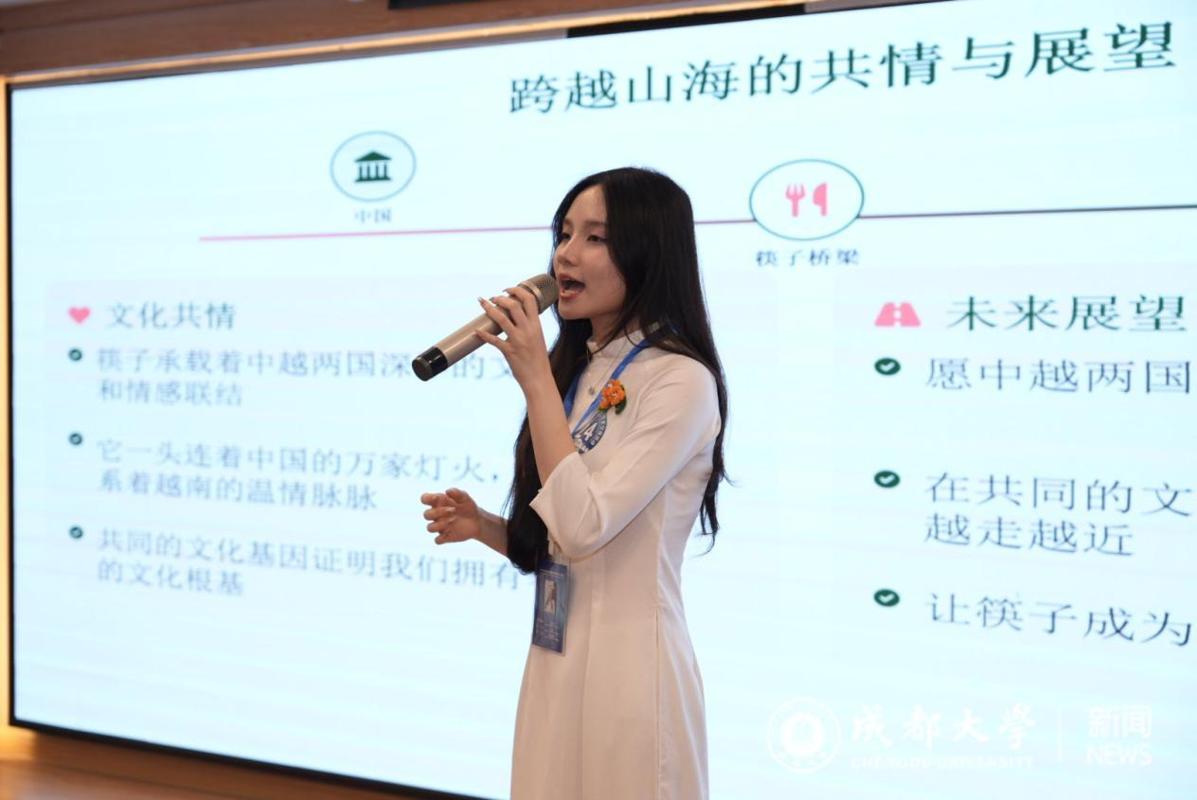
Warmth in Chopsticks: Shared Cultural Genes Between China and Vietnam
Vietnamese international student Trinh Tuong Vi (Zheng Xiangwei) delivered a speech titled The Shared Roots in Chopsticks: The Minimalist Wisdom Co-owned by China and Vietnam. Starting from the small tableware, she explored the profound cultural resonance between the two countries. She focused on the core role of chopsticks in family scenarios: at Chinese New Year’s Eve dinners, elders use chopsticks to pick up fish (symbolizing "abundance year after year") and place it into the bowls of younger generations; during Vietnamese Lunar New Year family feasts, the moment glutinous rice and lemongrass-grilled fish are served with bamboo chopsticks is a concrete expression of the ethics of "respecting elders and caring for the young." She also interpreted the philosophy of life behind chopsticks – the inclusiveness and flexibility, as well as integrity embodied in China’s "heaven is round, earth is square" concept, and the Vietnamese idea of "moderation in dipping fish sauce" which coincides with China’s "going beyond is as bad as falling short." "Chopsticks are a cross-sea bridge that shortens distances, connecting the daily warmth of China on one end and the tenderness of Vietnam on the other," her vision at the end of the speech turned this small tableware into a link connecting the hearts of the two countries, ultimately earning her the third prize.
The awards are a concentrated reflection of international students’ academic capabilities and cross-cultural expression skills. The four students not only showcased the cultural characteristics of their home countries but also conveyed their observations and reflections on the development of China and Hainan, transforming "civilizational mutual learning" from an abstract concept into tangible and perceptible practices. Held at a time when Hainan is fully implementing customs closure operations, this year’s exchange activity is of extraordinary significance.
The outstanding performance of the four ASEAN students not only demonstrates the solid achievements of the college in international talent cultivation but also promotes cultural ties between China and ASEAN countries through the voices of youth, injecting new vitality into regional cultural exchanges.